
What's in this roadmap
- What you are actually renting
- The two pricing models that cover almost every rental
- Truck sizes and what each one really holds
- Matching truck size to bedroom count
- The local rate, decoded
- The one-way flat rate, decoded
- Fuel: the line almost nobody budgets
- Miles per gallon, tank size, and the stops between
- Insurance: what your own policy probably will not cover
- The damage waiver and the rest of the counter menu
- Equipment add-ons: pads, dollies, straps, and ramps
- Deposits, holds, and what actually hits your card
- Late returns, refueling penalties, and cleaning fees
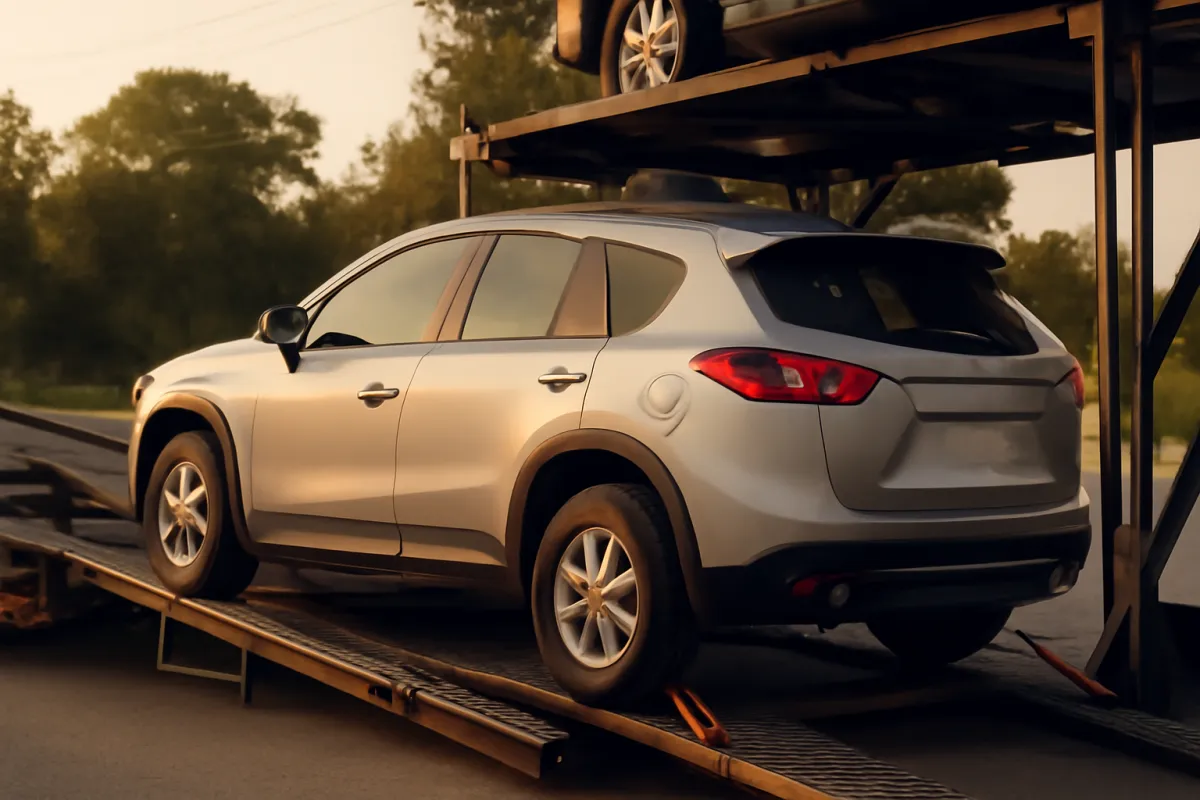
- Towing a car behind the truck
- Mileage allowances and the extra-day trap
- Where the money actually goes on a long move
- A worked example: a two-bedroom move across three states
- Rental truck versus full-service movers
- Rental truck versus a portable container
- Pricing your own labor honestly
- When the rental truck is clearly the right call
- When the rental truck is the wrong tool
- Booking windows, seasonality, and availability
- How to compare two truck quotes
- Common rental truck mistakes
- The bottom line
Short answer: A moving truck rental is priced two ways: local moves charge a small daily rate plus a per-mile fee, while one-way long-distance rentals charge a flat rate that bundles days and miles. Illustratively a local two-bedroom move lands near $195 all in, a 500-mile one-way near $1,430, a 1,000-mile one-way near $2,800, and a cross-country 26-foot rental with a car towed near $5,800, with fuel at 7 to 11 miles per gallon the forgotten line.
Ask what a moving truck costs and you will get an answer from the sign at the counter, which is a daily rate small enough to feel like a rounding error. That number is real, and it is also the smallest line on the final bill. Everything else assembles itself over the following days: the miles, the fuel, the coverage you did not plan to buy, the dolly, the second night in a motel, and the fee for bringing the tank back a quarter low.
This roadmap prices the do-it-yourself option properly. ReloPeak already prices full-service crews and portable containers, and the rental truck is the third choice sitting between them: cheapest on the invoice, most expensive in your own hours, and the only one that carries your car along with your furniture. Every figure here is illustrative, chosen to show how truck pricing is built rather than what your move will cost, and the calculator handles the income question waiting at the other end.
Key takeaways
- Two pricing models cover almost every rental: local moves charge a small daily rate plus a per-mile fee, while one-way long-distance moves charge a flat rate that bundles miles and days together.
- Illustratively a local two-bedroom move lands near $195 all in, a 500 mile one-way near $1,430, a 1,000 mile one-way near $2,800, and a cross-country 26 foot rental with a car towed near $5,800.
- Fuel is the forgotten line. Big box trucks run near 7 to 11 miles per gallon illustratively, so a 1,000 mile trip burns roughly 111 gallons and close to $400.
- Your own auto policy and your credit card often exclude box trucks, trailers, and cargo, which is why the counter coverage exists and why declining it blind is the expensive move.
- The truck beats movers by thousands in cash and loses most of that edge once you price the roughly 36 hours of loading, driving, and unloading it asks of you.
What you are actually renting
A rental truck is a box on a chassis, and the rental contract hands you four things: the vehicle, a fuel level you must return, a mileage arrangement, and a return deadline measured in hours rather than days. Nothing else comes with it. No pads, no dolly, no straps, no help, no protection for what you put inside, and no responsibility on the company’s part for how the load survives the drive.
That is the whole product, and reading it that way explains most of the confusion around price. The advertised rate covers the box and the chassis. The other three items on the contract are each a meter, and each one has a penalty attached if you get it wrong. Fuel returned low costs more than fuel you buy yourself. Miles beyond an allowance are billed per mile. Hours past the return time are billed as a late fee or a whole extra day.
Compare that with what you buy from a moving company, where labor, equipment, materials, and a liability arrangement all come bundled, and the price difference stops looking like a discount and starts looking like an unbundling. You are not getting the same thing cheaper. You are getting a much smaller thing and supplying the rest.
The two pricing models that cover almost every rental
Almost every truck rental in the market runs on one of two structures, and knowing which one you are shopping is the difference between a sensible comparison and a meaningless one.
The first is the local, round-trip model: a modest daily rate plus a charge for every mile the odometer records. The daily rate is deliberately low, often low enough to be the headline in advertising, because the mileage charge is where the money is. Illustratively the daily rate might sit somewhere from $25 for the smallest van to $60 for a 26 foot truck, with mileage somewhere from $0.89 to $1.19 per mile. Drive 40 miles and the mileage barely registers. Drive 300 and it dwarfs the rate.
The second is the one-way model: a single flat rate for a specific origin, destination, and pickup date, which already includes an allowance of days and an allowance of miles sized for the route. There is no visible per-mile charge until you exceed the allowance. The number looks alarming beside the local daily rate, but it is answering a different question, and it exists so you never have to drive an empty truck home.
Truck sizes and what each one really holds
Truck sizes are marketed by exterior length, which tells you almost nothing useful. What matters is cubic feet of usable box and how much weight the chassis is rated to carry. Illustratively a small cargo van offers something in the range of 200 to 300 cubic feet, a 15 foot box truck somewhere near 750, a 20 foot truck somewhere near 1,000 to 1,200, and a 26 foot truck somewhere near 1,500 to 1,700.
Those numbers are only half the story, because a box truck fills by volume long before it hits its weight rating for most household goods, with two exceptions that reverse the rule: books and tools. A garage of hand tools, a home gym, or a serious library will find the weight limit while the box still looks half empty, and overloading a rental truck is both a safety problem and a contract violation.
The second practical detail is the loft space above the cab on box trucks, sometimes called an attic. It is usually counted in the advertised cubic feet, and it is genuinely useful for mattresses and long light items, but only if you load it early. Fill the floor first and the loft becomes unreachable.
Since the daily rate is the number advertised loudest, here is each size against its own illustrative local day rate, separate from mileage, fuel, and the counter extras priced later in this roadmap:
- Cargo van, roughly 200 to 300 cubic feet: near $25 per day locally.
- 15 foot truck, roughly 750 cubic feet: near $35 per day locally.
- 20 foot truck, roughly 1,000 to 1,200 cubic feet: near $50 per day locally.
- 26 foot truck, roughly 1,500 to 1,700 cubic feet: near $60 per day locally.
Treat that list as a starting point rather than a quote. The day rate moves with market, season, and availability, and on a one-way rental it disappears entirely into the flat rate described below. It is useful mainly for comparing sizes against each other, not for predicting your own total.
Matching truck size to bedroom count
Bedroom count is the shorthand everyone uses, so here is the honest version of it. A studio or a single room of furniture usually fits a 10 foot van or the smallest box truck. A one-bedroom apartment usually fits a 15 foot truck. A two-bedroom household usually fits a 20 foot truck. A three-bedroom house usually needs a 26 foot truck, and a four-bedroom house often needs a 26 foot truck plus a second vehicle or a ruthless declutter.
The variable that breaks this table is not floor plan but tenure. Two people who have lived in the same two-bedroom apartment for eight years will own roughly the volume of a small house, while a two-bedroom rented for eighteen months might genuinely fit a 15 foot truck. Our downsizing roadmap is the cheapest lever here, because every cubic foot you do not move is a cubic foot you never pay to move.
When the count is genuinely ambiguous, size up. The price difference between two adjacent truck sizes is usually small, illustratively $10 to $15 per day locally or a few hundred dollars on a long one-way. The price of discovering at 9pm that the load does not fit is a second trip, a second rental, or a pile of furniture left on a curb.

The local rate, decoded
A local rental bill has four parts and they behave very differently. The daily rate is fixed and small. The mileage charge is variable and grows with every errand. The fuel is yours. The counter extras, coverage and equipment, are close to fixed for a one-day rental.
Work a studio move of about 30 miles at illustrative rates. The daily rate on a small van, near $25. Mileage at $0.89 for 30 miles, near $27. Fuel at 11 miles per gallon and $3.60 per gallon, near $10. Coverage for the day, near $25. A dolly and a set of pads, near $30. Total near $115.
Now a two-bedroom move of about 60 miles in a 20 foot truck. Daily rate near $50. Mileage at $1.09 for 60 miles, near $65. Fuel at 9 miles per gallon, near $24. Coverage near $25, equipment near $30. Total near $195. The truck rate is a third of that bill and the mileage another third, which is why the single biggest local savings lever is combining trips rather than shaving the rate.
One warning about local mileage: it counts every mile, including the drive from the rental lot to your old address and from your new address back to the lot. Two round trips across a metro area can quietly double the mileage line.
The one-way flat rate, decoded
A one-way quote is a single number attached to a specific origin, destination, and pickup window, and it moves for reasons that have nothing to do with you. Rental companies run a fleet-balancing problem, so a route running against the seasonal flow of trucks is cheap and a route running with it is expensive. The same truck, the same week, in the opposite direction, can differ by hundreds of dollars.
Inside that flat rate sit two allowances. One is a number of days, usually generous enough for a sensible driving pace plus loading and unloading time, illustratively four days for a 1,000 mile route and seven for a cross-country one. The other is a mileage allowance sized to a reasonable route between the two addresses, with a per-mile charge for anything beyond it.
Illustratively, a 15 foot truck on a 500 mile route might quote near $850, a 20 foot truck on 1,000 miles near $1,500, and a 26 foot truck on 2,500 miles near $2,700. The pattern is worth noticing: the rate per mile falls sharply with distance, which is why long DIY moves look better against professional quotes than short ones do.
Illustrative all-in rental truck totals by move type
Truck rate, fuel, coverage, equipment, tolls, and road nights included. Self-loaded. Illustrative planning frames, not quotes.
The jump between the bottom two bars and the top three is the jump between a round trip and a one-way. Local rentals are genuinely cheap. Long ones are a real move with a real budget, and the truck rate is only about half of it.
Fuel: the line almost nobody budgets
Fuel is the single most underestimated cost in DIY moving, and the reason is simple: people price the trip using their own car’s economy. A loaded box truck is nothing like a car. It is tall, blunt, heavy, and geared to pull weight rather than to sip fuel, and the load itself costs you another mile or two per gallon.
Illustrative real-world figures, loaded and driven at highway speed: near 11 miles per gallon for a small cargo van, near 10 for a 15 foot truck, near 9 for a 20 foot truck, and near 7 for a 26 foot truck. Towing a car takes another chunk off, often a full mile per gallon or more.
Run the arithmetic on the 1,000 mile example. At 9 miles per gallon that is roughly 111 gallons. At an illustrative $3.60 per gallon that is close to $400, which is more than a quarter of what the truck itself costs. On the 2,500 mile example at 7 miles per gallon it is roughly 357 gallons and close to $1,285, which by itself exceeds most people’s entire mental budget for a DIY move.
Two mechanics make this worse than the raw number. Fuel prices vary by state and by highway exit, and a loaded truck at 70 miles per hour burns noticeably more than the same truck at 60. Slowing down is a real, unglamorous lever.
Miles per gallon, tank size, and the stops between
Tank size decides your rhythm, and it is worth knowing before you leave. Illustratively a small rental van might carry a tank in the 25 to 35 gallon range, a mid-size box truck 30 to 40 gallons, and a 26 foot truck 40 to 60 gallons, with some of the largest running on diesel rather than gasoline.
Multiply tank by economy and you get range. A 20 foot truck with a 35 gallon tank at 9 miles per gallon has a theoretical range near 315 miles, which in practice means stopping every 200 to 250 miles because nobody wants to find out where empty is in a loaded truck. A 26 foot truck with a 50 gallon tank at 7 miles per gallon has a similar working range despite the bigger tank.
Two operational details follow. First, each stop costs real time, because a full fill on a 40 gallon tank is slow and a box truck rarely fits a normal pump lane comfortably. Budget 20 to 30 minutes per stop, not five. Second, confirm the fuel type in writing at pickup. Putting gasoline in a diesel truck is one of the few mistakes on this list that can end a move entirely, and it is not covered by anything you bought at the counter.
Insurance: what your own policy probably will not cover
This is the section people skip and then regret. Personal auto policies commonly extend liability and sometimes physical damage to a rented passenger vehicle, but many exclude vehicles above a stated size or weight class, and box trucks frequently land on the wrong side of that line. Credit card rental benefits often carry the same exclusion, along with a separate exclusion for trucks used to move household goods.
Cargo is a separate problem again. Your auto policy insures vehicles, not the contents of a vehicle. Renters or homeowners coverage may extend to belongings in transit, and it may not, and the limits and deductible may make a claim pointless even when it applies. Our coverage roadmap walks the same logic on the professional side, where valuation replaces insurance as the operative word.
The mechanism to follow rather than a rule to trust: call your own insurer, name the exact truck length and gross weight rating, name the trailer or dolly if you are towing, and ask specifically about liability, physical damage to the truck, and contents. Then read your credit card benefit guide for the same three. Whatever comes back uncovered is the gap the counter products are priced to fill.
The damage waiver and the rest of the counter menu
The counter menu is usually four products under varying names. A damage waiver, which is not insurance but a contractual agreement that the company will not pursue you for damage to the truck. Supplemental liability, which covers injury or damage you cause to others beyond a minimal statutory floor. Cargo protection, which covers your belongings against named events with a deductible. And a personal accident or medical product for the occupants.
Illustrative pricing runs somewhere from $25 to $40 per rental day for a reasonable bundle, which on a four-day one-way move is near $160 and on a seven-day cross-country move near $280. That is real money, and it is also small next to the deductible on a truck you scraped under a low overhang.
The two questions that decide it: does your own policy cover this vehicle class, and could you write a check for the truck’s repair without the move collapsing. If the answer to either is no, buy the coverage. Read what each product excludes before you sign, because a damage waiver commonly voids on unauthorized drivers, off-road use, overhead collisions, and driving under the influence. Overhead damage is the exclusion that catches movers, since low bridges and drive-through canopies are exactly what a box truck is bad at.
Equipment add-ons: pads, dollies, straps, and ramps
None of the equipment comes with the truck, and all of it matters more than its price suggests. Illustrative counter rates: a dozen furniture pads near $10 to $15 per rental, a utility dolly near $7 to $10, an appliance dolly with a strap near $10 to $15, and a set of ratchet straps or a rope near $10. Budget near $30 for a local move and near $60 for a long one-way, and treat that as one of the highest-return lines in the entire bill.
Two items are close to non-negotiable. Pads, because a box truck’s walls and your furniture’s finish do not agree, and unpadded pieces arrive scuffed even on a short drive. And straps, because a load that is not tied to the wall rails will shift on the first highway curve. Our truck loading roadmap covers the tier-by-tier order that keeps a load intact.
Check the ramp before you book. Not every rental truck has one, and the smallest vans usually do not. Loading a sofa into a truck with a three foot lip and no ramp turns a manageable day into an injury waiting to happen, and our heavy furniture roadmap exists mostly because people try it anyway.

Deposits, holds, and what actually hits your card
A deposit is not a cost, but it behaves like one for a few days, and that matters when a move is already stretching a bank balance. Rental companies commonly place an authorization hold on a card at pickup, sized to the estimated rental plus a cushion for fuel and overages. Illustratively that might be the quoted amount plus $100 to $150, and it typically releases within a few business days of return.
Two practical consequences. A debit card hold removes real money from a real balance while a credit card hold only removes available credit, which is why paying with a credit card at the counter is usually the better mechanic even if you settle the card that week. And a hold placed the same week as a security deposit on a new apartment can crowd out the moving budget entirely, so sequence them deliberately using our moving budget roadmap.
Ask three things at booking: how large the hold will be, whether a debit card carries extra requirements such as a credit check or a larger hold, and how the final charge is settled if the actual miles or days differ from the estimate. Companies vary, the answers are not secret, and the difference between them is worth knowing before your card is at the counter.
Late returns, refueling penalties, and cleaning fees
The fee schedule is where a well-planned rental turns into an unpleasant surprise, and every fee on it is avoidable with an hour of attention.
Late returns are billed against a specific hour, not a date. A truck due back at 2pm and returned at 6pm is commonly charged an extra day, and on a one-way rental an extra day can also trigger a mileage recalculation. Confirm the exact return time in writing and set an alarm for two hours before it.
Refueling is the most common charge of all. The contract records a fuel level at pickup and expects the same level back. Return it low and the company refills it at a rate well above pump price, illustratively a large premium per gallon, plus a service fee on top. Filling the tank yourself in the last ten miles is one of the cheapest decisions in the whole move.
Cleaning or sweep-out fees apply when the box comes back with debris, and illustratively run somewhere near $25 to $50. Five minutes with a broom settles it. The same logic covers unreturned equipment, which is billed at replacement cost rather than rental cost, so count the pads back into the bag.
Towing a car behind the truck
This is the rental truck’s genuine structural advantage, and it is the reason many one-vehicle households choose it. A container cannot carry your car. A moving crew will not. A truck can, using one of two attachments.
A tow dolly lifts the front wheels off the ground and lets the rear wheels roll. It is lighter, cheaper, and fits most front-wheel-drive cars, and it makes reversing effectively impossible. Illustratively it runs near $250 on a 1,000 mile one-way and near $400 on a cross-country route. A car trailer carries all four wheels off the ground, works with far more vehicles including rear-wheel-drive and all-wheel-drive cars, costs more, and adds substantially more weight and length.
Set that against shipping the car separately, which our car shipping roadmap prices near $800 for a 1,000 mile run illustratively. Towing usually wins on cash and loses on comfort: the truck drives worse, your fuel economy falls, every stop needs a pull-through space, and mountain grades become a real consideration. Confirm your specific vehicle’s towability before booking, since some drivetrains cannot be towed with drive wheels down without damage.
Mileage allowances and the extra-day trap
One-way quotes bundle days and miles, and both bundles have edges. The mileage allowance is calculated against a reasonable route between the two addresses, so a detour to see family or a scenic reroute can push you over it, and overage is billed per mile at a rate that is not discounted. If you plan a detour, ask for the allowance in writing at booking and either accept the overage or request a larger one.
The day allowance is the trap that costs more. It is sized for driving, not for a leisurely departure, and it starts when you pick up the truck rather than when you finish loading. Load slowly on day one and you have spent a driving day. Illustratively, a route with a four-day allowance and a full day of loading leaves three days for 1,000 miles, which is comfortable, while the same allowance on a 1,500 mile route is not.
The fix is to book the loading day as part of the plan rather than hoping it fits. If the allowance is tight, ask what an extra day costs at booking, which is almost always cheaper than the same day added at the end as a late fee. Our long-distance planning roadmap sequences the whole calendar around this constraint.
Where the money actually goes on a long move
Seeing the shape of the bill changes which levers you pull. On the illustrative 1,000 mile two-bedroom move, the truck rate is a little over half the total and everything else splits into three roughly equal thirds: fuel, the road itself, and the counter plus the tow.
Where an illustrative 1,000 mile rental truck bill goes
Two-bedroom household, 20 foot truck, car on a tow dolly, self-loaded, four rental days. Illustrative shares; yours will differ.
Almost half this bill is not the truck. That is why shopping the rate alone barely moves the total, while dropping the tow dolly, driving one fewer night, or loading a smaller truck each move it by hundreds.
A worked example: a two-bedroom move across three states
Two people, a two-bedroom apartment lived in for three years, moving roughly 1,000 miles, with one car to bring along and no budget for a crew. Here is the whole bill at illustrative rates.
The truck: a 20 foot one-way rental with a four-day allowance, near $1,500. Fuel: 1,000 miles at 9 miles per gallon is roughly 111 gallons, at $3.60 a gallon that is near $400. Tow dolly for the car, near $250. Counter coverage at $40 per day for four days, near $160. Equipment, a dozen pads and two dollies, near $60. Road costs: two motel nights at $190 and roughly $60 of tolls and food, near $440. A refundable hold of about $150 sits on the card and is not a cost.
Total: near $2,810.
Notice what that does to the commonly quoted DIY number. Truck plus fuel alone is near $1,900, which is where the familiar “about two thousand dollars” figure comes from. The remaining $900 is the part people discover on the road. Run your own version in the calculator companion attached to this roadmap, which uses exactly this arithmetic.
Rental truck versus full-service movers
Put the same household beside a professional quote. Our movers pricing roadmap puts a two-bedroom household at 1,000 miles near $6,000 illustratively, built from weight and distance with packing and materials on top. The rental truck version above lands near $2,810 with the car included.
That is a cash gap of roughly $3,200, and it is the honest reason DIY exists. What the gap buys the professional side is worth naming precisely: a trained crew that wraps and carries everything, a liability arrangement with a defined claims process, no driving, no lifting, no motel nights, and no risk that a load shifts because you tied it badly.
The gap narrows in two situations. Small households at long distances, where the truck’s fixed costs stay high while the professional quote falls with weight. And very large households, where a 26 foot truck may not be enough and the DIY plan needs two vehicles or two trips. For a three-bedroom house specifically, our three-bedroom pricing roadmap is the comparison to run before assuming DIY wins.
Rental truck versus a portable container
The container sits between the two, and it is the comparison most people should actually be making. Our container pricing roadmap puts one container at 1,000 miles near $3,000 illustratively, self-loaded, with a month of storage.
Straight across, that is near $3,000 for the container against near $2,810 for the truck, which looks like a tie until you add the car. The container cannot take it, so shipping the vehicle adds roughly $800 and pushes the container plan near $3,800. The truck tows it for $250. On a one-vehicle household moving a long distance, that single structural difference is often the whole decision.
Where the container wins back: you do not drive, you load over a week instead of a day, there are no motel nights, storage is built in, and nobody has to reverse a 26 foot vehicle into a narrow street. Where the truck wins: total cash, the car, and complete control of the schedule. The container loses badly when the destination has nowhere legal to place it, which our container roadmap treats as the first thing to check.
Pricing your own labor honestly
Every DIY comparison that ignores your own hours is a rigged comparison, so price them. The 1,000 mile example asks roughly 14 hours of loading and unloading for a two-bedroom household and roughly 22 hours behind the wheel at a realistic pace including stops. Call it 36 hours.
At an illustrative $30 per hour, a deliberately modest figure, that is close to $1,080 of your own time, which moves the truck total from near $2,810 to near $3,900 on a fully loaded basis. The container plan, self-loaded but not self-driven, absorbs about 14 hours, near $420, landing near $3,420 with the car shipped. The professional move absorbs perhaps four hours of your supervision.
Two honest caveats in both directions. Your hours are not always worth cash, and a weekend you would otherwise spend at home is genuinely cheaper than a weekend of billable work. But the hours also carry risk that a dollar figure does not capture: injury, damaged furniture, and the fact that a tired driver on hour ten of a loaded truck is the real hazard in this plan. Our true cost roadmap works through the same accounting across the whole move.
When the rental truck is clearly the right call
The truck wins cleanly in a recognizable set of situations, and if you are in one of them the rest of this comparison is academic.
Short local moves are the clearest case. At 30 to 60 miles the total lands near $115 to $195 illustratively, which no other option comes close to, and the whole thing fits in an afternoon. A one-bedroom or studio household with modest furniture and one or two willing helpers is the second case, at almost any distance, because the fixed costs are small and the loading is genuinely manageable.
The third case is the one-vehicle household making a long move, where towing the car behind the truck removes a separate $800 line and a separate logistics problem. The fourth is the tight-budget move where cash is the binding constraint and time is not, which is most first moves and most moves between jobs.
The fifth, less obvious, is any move where the destination cannot take a container. Dense city streets, buildings without driveways, and HOA rules that forbid a container in a driveway all push the decision back toward a truck you can double-park briefly and then take away.
When the rental truck is the wrong tool
It fails just as recognizably. Large households are the first case: a four-bedroom home rarely fits one truck, and a second trip across any real distance destroys the economics immediately.
Physical constraints are the second. Stairs without an elevator, a long carry from the curb, a piano, a gun safe, a treadmill, or anyone in the crew with a back history all change the calculation from cheap to dangerous. A piano alone is a reason to hire specialists regardless of what the rest of the move costs.
Winter mountain routes are the third. A loaded box truck handles badly in snow, rental trucks are commonly rear-wheel drive with a light rear end when empty and a heavy one when full, and chain requirements on mountain passes are a real operational problem. Our winter moving roadmap treats this as a planning input rather than a weather forecast.
The fourth is time pressure. A move that must be complete in 48 hours because a lease ends or a job starts leaves no room for a breakdown, a delay, or a load that took longer than planned, and DIY has no slack in it.
Booking windows, seasonality, and availability
Truck rental pricing responds to fleet position, and fleet position responds to the calendar. The busy season runs roughly from late spring through early autumn, peaking around month ends and holiday weekends, and one-way rates on popular corridors rise accordingly. The specific pattern varies by market and by year, so treat the direction as reliable and the magnitude as something to check.
Availability is the harder constraint on one-way rentals, because the company can only give you a truck that is physically in your city. Popular outbound routes in peak season sell out of the sizes people actually want, and a caller who waited is offered a 15 foot truck for a two-bedroom household or a pickup date three days off. Booking four to six weeks ahead for a peak-season one-way is not caution, it is how you get the right size.
Two levers are worth trying. Mid-month, mid-week pickups avoid the month-end lease-turnover crush. And asking about a nearby pickup location can surface a truck that the closest branch does not have, at the cost of a few extra miles. The calculator can tell you whether the destination market justifies the timing tradeoff at all.
How to compare two truck quotes
Truck quotes are comparable only when you normalize four things, and most people compare the rate alone.
First, normalize the size in cubic feet rather than in feet of exterior length, because naming conventions differ between companies. Second, normalize the allowances: how many rental days and how many miles are included, and what each additional one costs. Third, normalize the fee schedule: refueling rate, late return policy, cleaning fee, and the percentage-based surcharges that appear as environmental or license recovery lines. Fourth, normalize the coverage, since a bundle at one counter may cover cargo while another at the same price does not.
Then add the same three lines to both quotes yourself: fuel computed from that specific truck’s economy, road nights computed from the day allowance, and equipment. Only after that are the two numbers actually the same kind of number.
Finally, get the total in writing with the fee schedule attached, the same discipline our moving company roadmap applies to professional estimates. A verbal quote and a written total on a one-way rental are frequently not the same figure.
Common rental truck mistakes
Six recurring ones, in rough order of how much they cost.
Renting one size too small. It is the expensive mistake because it becomes a second trip, a second rental, or abandoned furniture, and it costs more than every fee on the contract combined.
Declining coverage without checking the policy. The mechanism is not obvious and the exclusions for box trucks and cargo are common, so an assumption here is a large uninsured bet.
Forgetting fuel entirely. A budget built on the truck rate alone is short by hundreds on any long move, and the shortfall arrives at a highway pump when options are limited.
Loading loose. Nothing on a rental truck holds your load together except the straps you tied, and a shifted load damages more furniture than the entire drive does. Our packing roadmap and the truck loading order are the prevention.
Not photographing the truck. Take dated photos of every panel, the roof edge, the fuel gauge, and the odometer at pickup and again at return. Disputes over pre-existing damage are common and one-sided without evidence, and our damage claim roadmap explains why documentation decides these.
Underestimating the drive. A loaded box truck is slower, wider, taller, and far worse at braking than your car. Plan 400 to 450 miles per day, not 600, and check every route for low clearance before you commit to it.
The bottom line
A moving truck rental is priced by two models and finished by a dozen small lines. Locally you pay a modest daily rate plus every mile, which illustratively lands near $115 for a studio and near $195 for a two-bedroom across a metro area. One-way you pay a flat rate that bundles days and miles, illustratively near $850 at 500 miles, near $1,500 at 1,000, and near $2,700 for a cross-country 26 foot truck. Then add fuel at 7 to 11 miles per gallon, coverage at $25 to $40 a day, equipment near $30 to $60, a tow dolly near $250, and road nights, which together carry the 1,000 mile example from $1,500 to near $2,810 all in. Against near $6,000 for a full-service crew and near $3,800 for a container with the car shipped separately, the truck is the cash winner, and it stops being one the moment you price your own 36 hours at anything serious. Rent the truck when the move is short, the household is small, or the car has to come along, hire the move when stairs, size, weather, or a deadline are in play, and settle the destination math with the calculator and our roadmaps on what it costs to move out of state and portable container pricing.
ReloPeak publishes this roadmap as general education about how do-it-yourself truck rental pricing is structured, not as a quote, a recommendation, or professional advice, and it describes no particular rental company’s terms or official rates. Every dollar figure, mileage estimate, fuel economy band, and percentage in it was chosen to illustrate the shape of the bill rather than to predict yours, and real prices swing with the season, the route, the market, and the day. Confirm your own coverage with your insurer and your card issuer, read the rental contract and its fee schedule before signing, and take insurance, liability, or contract questions to a qualified professional.
Frequently asked questions
How much does it cost to rent a moving truck?
There is no single number, because two completely different pricing models sit behind the question. A local rental is priced as a small daily rate plus a charge for every mile you drive, which illustratively puts a studio move of about 30 miles near $115 all in and a two-bedroom move of about 60 miles near $195 all in once fuel, counter coverage, and equipment are added. A one-way long-distance rental is priced as a flat rate that already bundles a mileage allowance and a number of days, which illustratively puts a two-bedroom move of 1,000 miles near $1,500 for the truck alone and near $2,800 once fuel, a tow dolly, coverage, equipment, tolls, and road nights are counted. Those are illustrative planning frames rather than quotes, so price your own dates and addresses before you commit.
What size moving truck do I need for a 2-bedroom apartment?
A 20 foot truck is the usual match for a two-bedroom household, with a 15 foot truck working when the second bedroom is mostly an office and a 26 foot truck being the safer choice when the apartment has been lived in for years and holds a full dining set, a large sofa, and a garage worth of storage. The honest test is not bedroom count but cubic feet, and cubic feet track how long you have lived somewhere far better than they track floor plan. Walk the rooms, count the large items, and size up one step if the count surprises you, because a second trip or a second rental costs far more than the price difference between two truck sizes.
Is it cheaper to rent a truck or hire movers?
In cash terms the truck almost always wins, and the gap is large. On an illustrative two-bedroom move of 1,000 miles a full-service crew lands near $6,000, a portable container near $3,000 before you deal with your car, and a self-driven rental truck near $2,800 all in with a car towed behind it. What the truck does not save is your own time and risk. That same move asks roughly 36 hours of loading, driving, and unloading, and if you price those hours at an illustrative $30 the truck total moves toward $3,900. The truck is the cheapest option on the invoice and the most expensive one on your calendar.
Do I have to pay for fuel in a moving truck rental?
Yes, and it is the line most people leave out of their budget. Rental trucks are handed over with a fuel level noted on the contract and are expected back at the same level, so every gallon burned is yours. Large box trucks are heavy, boxy, and geared for load rather than economy, so illustrative real-world figures run near 11 miles per gallon for the smallest cargo van, near 9 for a mid-size box truck, and near 7 for the largest. On a 1,000 mile move in a 20 foot truck that is roughly 111 gallons, or close to $400 at an illustrative $3.60 per gallon. Bring the truck back short of the marked level and the counter refills it at a premium rate plus a service charge.
Does my car insurance cover a rental moving truck?
Often not, and this is where DIY movers get caught. Many personal auto policies extend to a rented passenger car but exclude vehicles above a certain size or weight class, and most exclude trailers, tow dollies, and cargo entirely. Credit card rental benefits frequently carry the same box-truck exclusion. The mechanism to check is your own policy language and your card benefit guide, not a general rule, so call your insurer with the exact truck size before you decline anything at the counter. If the answer is no or unclear, the counter products exist for that reason, and buying them for a few days is far cheaper than discovering the gap after a low bridge.
What hidden fees come with a moving truck rental?
The recurring ones are refueling charges when the tank comes back low, late return fees when the truck is out past the contracted hour, cleaning or sweep-out fees when the box is returned dirty, environmental or vehicle license recovery surcharges added as a percentage, mileage overage on one-way rentals that included an allowance, and equipment left unreturned. None of them are secret, but they live in the contract rather than the advertised rate. Read the fee schedule at booking, photograph the fuel gauge and odometer at pickup and drop-off, and confirm the exact return time rather than the return day.
Can you tow a car behind a moving truck?
Usually yes, using either a tow dolly that lifts the front wheels or a car trailer that carries all four. Both are rented separately from the truck, both add real cost, and both change how the vehicle drives. Illustratively a tow dolly on a 1,000 mile one-way move runs near $250 and a full car trailer near $350, which compares well against roughly $800 to ship the same car on a carrier. The catch is that towing narrows your fuel economy, lengthens every stop, removes reversing as a practical option with a dolly, and adds a compatibility check, since not every vehicle can be towed with its drive wheels on the ground.
Is a one-way truck rental cheaper than a round trip?
They are not really comparable, because they answer different questions. A round-trip local rental is cheap per day and expensive per mile, so it wins when the distance is short and the truck comes home the same evening. A one-way rental carries a flat rate that already covers the miles and days you need, and it exists so you do not have to drive an empty truck back across the country. On a long move the one-way rate is always the right product even though the number looks large, because the round-trip alternative would charge you mileage in both directions plus days you spend driving nothing anywhere.