
What's in this roadmap
- What an out-of-state move actually costs
- Why interstate pricing is a different machine
- How movers estimate the weight of your stuff
- Illustrative interstate cost by home size
- How distance scales a long-distance move
- The full cost spectrum from full-service to freight
- Where a long-distance move budget goes
- The DIY cross-country math
- The cheapest way to move out of state
- The hybrid middle path: rental truck plus hired labor
- Binding vs non-binding estimates for interstate
- The licensed interstate mover check
- The reweigh risk on a long-distance move
- Packing and specialty items over distance
- Car shipping versus driving it yourself
- Timing and delivery windows on a long haul
- Deposit demands and rogue-mover scams
- Storage-in-transit when the dates do not line up
- The hidden costs of settling in a new state
- A worked example: two interstate moves at two distances
- The bottom line
Short answer: Illustratively, full-service interstate moves run roughly $2,000 to $5,000 for a studio or one-bedroom, $4,000 to $9,000 for a two-bedroom, and $7,000 to $15,000 or more for a three-bedroom, because an out-of-state move is priced on weight times distance rather than hours. On the same model a two-bedroom runs near $4,400 at 500 miles, $6,000 at 1,000 and $10,900 at 2,500; containers commonly cost 30 to 50 percent less and DIY less still.
How much does it cost to move out of state? The honest first answer is that the meter is different from the one you know. A local move is a labor purchase, billed by the crew-hour, and a Saturday of friends and pizza can still stand in for it. An interstate move is a freight purchase, priced on the weight of everything you own multiplied by the miles it has to travel, and the moment your belongings cross a state line the whole pricing machine changes species. That shift is why a move that felt like a few hundred dollars across town can become a five-figure decision across the country.
This roadmap prices the long-distance, out-of-state reality specifically: the weight-times-distance model that governs interstate quotes, illustrative ranges by home size, how distance scales the total from 500 to 2,500 miles, the full spectrum from full-service down to a rented freight trailer, the true DIY cross-country math, the licensing and estimate checks that protect a shipment this large, car shipping versus driving it, delivery windows, and a worked example that runs two interstate moves at two distances. It is the interstate sibling of our moving-cost roadmap, which prices every home size and strategy, and our true-cost-of-relocating roadmap, which counts everything past the truck. The calculator handles the salary side of the new state while you read. And if the move is one student headed to campus rather than a household, the scaled-down math lives in our college move-in roadmap.
Key takeaways
- An out-of-state move is priced on weight times distance, not hours, so the two multipliers of your shipment's pounds and the route's miles set the bill.
- Illustratively, full-service interstate ranges run roughly $2,000 to $5,000 for a studio or one-bedroom, $4,000 to $9,000 for a two-bedroom, and $7,000 to $15,000 or more for a three-bedroom household.
- Distance scales the total almost linearly: on the illustrative model a two-bedroom runs near $4,400 at 500 miles, $6,000 at 1,000, and $10,900 at 2,500.
- Containers commonly cost 30 to 50 percent less than full-service and DIY less still, each trading dollars for your own labor and days on the road.
- Verify the carrier's federal registration, insist on a binding or not-to-exceed estimate from a real survey, and budget the settling-in costs that arrive after the truck.
What an out-of-state move actually costs
Start with the direct answer, then earn it across the rest of this roadmap. Illustratively, a full-service out-of-state move commonly lands somewhere around $2,000 to $5,000 for a studio or one-bedroom, $4,000 to $9,000 for a two-bedroom, and $7,000 to $15,000 or more for a three-bedroom home, with position inside each band set mostly by distance and how much packing you buy. Choose a container instead and those figures commonly fall 30 to 50 percent. Choose a DIY truck rental and they fall further still, though not as far as the advertised rate suggests once the road is counted honestly.
Those ranges are wide on purpose, because an interstate quote is a product of two variables that both move a lot: the weight of your particular household and the length of your particular route. A lightly furnished two-bedroom moving 400 miles and a fully loaded one crossing the country are the same nominal size and nowhere near the same price. The rest of this roadmap takes the machine apart so the number you budget is one you built from your own pounds, your own miles, and your own strategy, not an average published for a household that is not yours.
Why interstate pricing is a different machine
Cross a state line, or travel more than roughly 50 to 100 miles, and most movers switch from the local hourly model to interstate long-distance pricing, and the change is not cosmetic. A local move bills by the mover-hour, with the clock running from arrival to the last box down, so preparation and access dominate the bill. An interstate move bills on a linehaul charge, the transportation cost computed from your shipment’s weight and the mileage, with fuel surcharges and accessorial fees clustered around it. Hours barely enter the equation.
The practical consequence is that everything you learned pricing a local move points the wrong way for a long one. On a local job you fight the bill by cutting crew-hours through staging and self-packing. On an interstate job you fight it by cutting weight before the survey, because weight is multiplied by distance, so every pound shed is subtracted twice. Our moving-cost roadmap walks the crew-hour model in full for the local case; this roadmap parks entirely on the interstate side, where the freight meter runs. The calculator waits on the destination side, pricing the salary the new state will ask of you.

How movers estimate the weight of your stuff
Because weight is one of the two multipliers, the number a mover assigns to your household is the single most important input to an interstate quote, and it is an estimate until the truck hits a scale. Estimators survey your rooms, by video walkthrough or in person, and translate the inventory into either a weight in pounds or a cube figure in cubic feet, which then converts to weight at a standard density. A studio commonly lands near 1,800 pounds illustratively, a one-bedroom near 2,600, a two-bedroom near 5,000, and a three-bedroom household near 8,500, with lightly or heavily furnished homes swinging well above and below.
That estimate matters because on a non-binding quote the scale settles the argument after loading, and a survey that missed the garage, the basement, or the exercise equipment produces a light number that the weigh ticket corrects upward once your belongings are already on the truck. Ask directly what weight or cube figure a quote assumes, and make sure it reflects the whole home rather than the rooms that were tidy on survey day. A careful survey is not a formality on a long move; it is the foundation the entire price sits on, which is exactly why the estimate type you sign matters so much later in this roadmap.
Illustrative interstate cost by home size
Home size sets the weight, and weight sets the base of every interstate quote, so it helps to see the sizes lined up before distance enters. On this roadmap’s illustrative full-service model, roughly $0.55 per pound in handling plus about $0.65 per pound for each 1,000 miles, a 1,000-mile move prices a studio near $1,600, a one-bedroom near $2,300, a two-bedroom near $6,000, and a three-bedroom household near $10,200. Stretch the same households to 2,500 miles and each figure climbs by the added distance multiplied across its weight, which is why a bigger home is punished harder by a longer route.
The lesson inside those numbers is that size and distance interact rather than add. Doubling the distance of a studio adds a modest amount because the weight it multiplies is small; doubling the distance of a three-bedroom adds thousands because the weight is large. If your household sits at the heavier end and your route is long, the two biggest levers you control are shedding weight before the survey and choosing a strategy that keeps some of the labor in your own hands. For the full ladder of home sizes priced side by side, including the local case, see our moving-cost roadmap.
How distance scales a long-distance move
Distance is the second multiplier, and seeing it laid out for one household explains why a cross-country move dwarfs a shorter interstate hop. The bars below apply this roadmap’s illustrative full-service model to a single two-bedroom household, roughly 5,000 pounds, at four common distances, holding everything else equal so the shape of the distance curve is visible on its own.
Illustrative interstate move cost by distance (2BR)
One 5,000-pound two-bedroom household, full-service. Illustrative totals, not quotes.
Each block of miles adds roughly $0.65 per pound, so the same two-bedroom keeps climbing almost linearly with the map. A heavier household would climb the same curve more steeply, because the distance multiplies more weight.
Read the chart as a straight line with a floor. The base handling charge sits under every move regardless of distance, and on top of it the linehaul adds a nearly constant amount per block of miles. There is no distance at which an interstate move suddenly gets cheap; there is only a curve that rises with the route. That is the core intuition for budgeting a long move: once you know your household’s weight, the map tells you the rest, and a 2,500-mile move is not a little more than a 500-mile one, it is roughly double or more.
The full cost spectrum from full-service to freight
The most consequential choice on an out-of-state move is how much of the labor you buy, and it runs along a spectrum with four common rungs. Full-service is the top: a carrier packs, loads, drives, and unloads, so you buy maximum convenience at maximum cost. A container or portable-storage box is the next rung down: the company drops a box, you load it, they drive it across the country, you unload it, so you buy the transport and keep the labor. A rented truck driven yourself is lower still, and a rented freight trailer, where you load a portion of a shared long-haul trailer and a carrier drives it, sits in a similar labor-heavy, cost-light band.

The money at stake across the spectrum is large on a long move. Illustratively, a 1,500-mile two-bedroom runs near $7,600 full-service, near $4,000 to $5,000 by container, and near $2,500 to $4,000 as a DIY truck once fuel and lodging are counted, with a freight trailer roughly in the container band. The gaps are labor changing hands, nothing more. The right rung depends on how many able bodies and flexible days you have, and the calculator beside this roadmap prices all of them live so you can see the trade in your own numbers rather than the averages here.
Where a long-distance move budget goes
A full-service interstate invoice reads like a wall of unfamiliar terms, so it helps to see the anatomy in proportion before negotiating any of it. The shares below are illustrative for a long-distance move; your mix shifts with distance and how much packing you buy.
Where a long-distance move budget goes
Illustrative share of a full-service interstate invoice. Your mix will differ.
The transport core is set by weight, distance, and season; the labor and packing block is where preparation and self-packing move the total, and the extras are where undisclosed access adds up.
The proportions explain the whole negotiating strategy for a long move. The transport block, the majority of the bill, responds to only three levers: weigh less by decluttering, move a different week to dodge the peak, or change strategy entirely toward a container or DIY. The labor-and-packing block responds to your own effort, because a packed, staged home cuts crew-hours at both ends. The extras block responds to disclosure, because access fees you flag in advance land on a comparable estimate rather than on the delivery-day bill. Knowing which block a charge lives in tells you whether to accept it, prepare it away, or push back on it.
The DIY cross-country math
The DIY option is where the advertised price and the real price diverge the most, because the rental rate on the billboard is the smallest line in the honest budget. A cross-country DIY move starts with a one-way truck rental, and one-way rates carry a premium plus per-mile charges that a local round-trip rental never shows. On top of that sit the lines that only appear on a long haul: fuel for a truck burning 8 to 10 miles per gallon across the whole route, tolls, several nights of lodging and meals, moving equipment, the loss-damage waiver at the counter, and the value of your own days behind the wheel.
Run one illustrative case. A two-bedroom moving 1,500 miles might rent a truck for a few hundred dollars in base rate, then add several hundred in one-way and mileage fees, three hundred to five hundred in fuel, a couple hundred in tolls, two or three nights of lodging and meals, and equipment, landing the honest all-in near $2,500 to $4,000. That still beats a $7,600 full-service figure meaningfully, but the gap is a saving paid entirely in your own labor and calendar, not a free lunch. The truck is also only the first bill: our true-cost-of-relocating roadmap counts the deposits, lost income, and setup costs that land after you arrive, and they can rival the drive itself.
The cheapest way to move out of state
If the only question is cost, the cheapest way to move out of state is the one where you supply the most labor, because on every interstate quote labor is the line that changes hands between you and a crew. Ranked strictly by dollars, a DIY one-way truck rental sits at the bottom, a moving container or portable-storage box sits in the middle, and full-service sits at the top, and the gaps between them are wide enough on a long haul to be worth thousands. The catch is that the ranking by dollars is the exact inverse of the ranking by effort: the cheapest option asks the most of your own back, your own days, and your own tolerance for driving a loaded truck across the country.
Put illustrative numbers on a single household so the spread is concrete. Take a two-bedroom, roughly 5,000 pounds, moving 1,500 miles. On this roadmap’s model that household runs near $7,600 full-service, near $4,000 to $5,000 by container, and near $2,500 to $4,000 as a DIY truck once fuel, one-way fees, tolls, and lodging are counted honestly. Shrink the home and the whole ladder drops: a studio or one-bedroom over the same distance might run near $2,300 to $3,500 full-service, near $1,500 to $2,500 by container, and near $1,200 to $2,000 DIY. Stretch the distance to a 2,500-mile cross-country haul and every rung climbs, because the linehaul multiplies weight across every added mile, but the ordering never changes: DIY stays cheapest, container stays the middle, full-service stays the top.
Here is the whole ladder at a glance, priced on that same illustrative two-bedroom, 5,000-pound household moving 1,500 miles, so you can compare every strategy in one look instead of stitching the numbers together from prose:
| Strategy | Illustrative cost (2BR, 1,500 mi) | Who supplies the labor | Best for |
|---|---|---|---|
| DIY one-way truck rental | $2,500 to $4,000 all in | You: pack, load, drive, unload | The tightest budgets with able helpers and flexible days |
| Hybrid: rental truck + hired loading crews | $3,000 to $4,600 | Crews lift at both ends, you drive | Tight budgets without strong backs or helpers |
| Rented freight trailer | Roughly the container band | You load a shared trailer, a pro drives | Skipping the drive without paying full-service |
| Moving container | $4,000 to $5,000 | You load and unload, the carrier hauls | The middle path, plus built-in storage flexibility |
| Full-service interstate mover | Near $7,600 | The crew does everything | Tight start dates or households without the bodies to lift |
Every figure is illustrative and scales with weight and miles, so treat the ordering as the reliable part and the dollars as placeholders until you have quotes on your own inventory. Distance and home size decide how large the saving actually is, and that is the part worth reading before you assume DIY wins. On a short interstate hop with a small household, the dollar gap between DIY and a container can be a few hundred dollars, which is a thin reward for driving a truck for two days, so the container often wins on effort-per-dollar. On a long cross-country move with a heavy household, the gap between full-service and either self-load option widens into the thousands, so keeping the labor pays much better. The genuinely cheapest way to move out of state is therefore not a fixed answer but a match: DIY for strong, flexible households on a budget, a container for people who want the drive handled without paying for a full crew, and full-service reserved for tight start dates or households without the bodies to do the lifting. The calculator and the companion beside this roadmap price all three rungs live on your own weight and miles, so you can see which saving is real for your move rather than assuming the billboard rate is the whole story.
The hybrid middle path: rental truck plus hired labor
Between pure DIY and the container sits a hybrid that rarely makes the billboard: rent the one-way truck yourself, but buy the lifting. Labor-only moving crews hire out by the hour without a truck, so the hybrid buys two or three hours of loading muscle at the origin, the same again for unloading at the destination, and leaves you only the drive. Illustratively, on the same two-bedroom 1,500-mile move used throughout this roadmap, the honest DIY total of $2,500 to $4,000 picks up several hundred dollars of hired labor across both ends and lands somewhere around $3,000 to $4,600, still at or below the $4,000 to $5,000 container figure and thousands under the $7,600 full-service number.
The reason the hybrid punches above its price is that it deletes the worst part of DIY rather than the cheapest part. The physical risk of a self-move concentrates in a few hours at each end, the appliance on the ramp, the dresser on the stairs, the sofa through the doorway, while the driving in between is long but not dangerous to your back. Hired loaders also pack a truck tighter than amateurs, which can be the difference between one truck size and the next, or between one trip and two. A rented freight trailer works as a second hybrid flavor: you load a portion of a shared long-haul trailer, hired labor optional, and a professional driver handles the road, putting the cost in roughly the container band while removing the drive entirely.
Choosing along the ladder comes down to which resource is scarce. If money is tightest and bodies are plentiful, pure DIY keeps the bottom rung. If money is tight but backs or helpers are the constraint, the hybrid buys exactly the hours of labor you lack and nothing more. If the drive itself is the dealbreaker, the container or freight trailer takes it, and full-service remains the option for tight start dates. Our moving-cost roadmap prices the labor-only crews in detail, and the companion beside this roadmap lets you set the strategy and watch the total move.
Binding vs non-binding estimates for interstate
On a shipment as heavy as a household crossing the country, the difference between a binding and a non-binding estimate is the difference between a price and a guess that can grow by thousands. A binding estimate commits the mover to a fixed price for the inventory it lists: if the survey was done properly and your belongings match it, the number holds. A binding not-to-exceed estimate is better still, because you pay the estimate or the actual weight-based cost, whichever is lower. A non-binding estimate commits the mover to nothing, and the final charge is recalculated from actual scale weight after loading.
Non-binding quotes grow for reasons both innocent and engineered, and both are amplified on a long move because the linehaul multiplies any weight error across every mile. Innocently, people underestimate a whole household and phone surveys miss the garage, so the shipment weighs more than anyone guessed. Engineered, a carrier competing for a lucrative interstate move has every incentive to project the shipment light, win the job on the low number, and let the scale deliver the correction after the truck is loaded and your leverage is gone. The defense is procedural: insist on a video or in-home survey of every room, get binding or not-to-exceed terms in writing, and treat the lowest sight-unseen quote in your stack as marketing, not a price. Our moving-cost roadmap covers the estimate types in depth across every move size.
The licensed interstate mover check
Interstate moving is federally regulated, which gives you a verification step that a local move does not, and skipping it on a long move is the most expensive shortcut available. Every legitimate interstate household-goods carrier must register with federal regulators and carry a USDOT number and an MC, or motor carrier, number. Those numbers are not decorations: you can look a company up by them to confirm the registration is active, the physical address is real, the authority covers household goods, and the complaint and safety history is not a warning in itself.
The check takes minutes and filters out the operators most likely to hold your belongings hostage later. A carrier that cannot produce its numbers, gives you a registration only weeks old, or trails a string of near-identical prior company names is telling you what it is before it ever touches a box. Brokers add a wrinkle worth understanding: a broker arranges your move but does not perform it, so confirm which company will actually load the truck and verify that carrier’s registration, not just the broker’s. On an out-of-state move the boring, verified, surveyed carrier is not the cautious choice, it is the whole point, because federal registration is the thread that lets regulators and your credit-card dispute reach a mover who misbehaves.
The reweigh risk on a long-distance move
Because a non-binding interstate bill settles on actual weight, the weigh ticket is a document worth understanding, and you have rights around it that quietly protect the total. A carrier weighs the truck empty, then loaded, and your shipment’s weight is the difference, which multiplied by the linehaul rate produces the charge. If the number lands higher than the estimate suggested, or simply higher than feels right for your household, you are entitled to request a reweigh before you pay, and the recalculated charge is based on the second weighing.
The reweigh right matters because weight is where an honest-looking bill can quietly inflate. A truck weighed with a full fuel tank empty and a lighter tank loaded, or with the crew and their equipment aboard for one weighing and not the other, produces a heavier shipment on paper than you actually own. You do not have to be an adversary about it: ask for the origin and destination weigh tickets, confirm the empty and loaded figures make sense, and exercise the reweigh option if the number surprises you. Pairing a binding not-to-exceed estimate with attention to the scale is the cleanest defense a long-distance shipper has, because it caps the price on one end and verifies it on the other.
Packing and specialty items over distance
Packing is the shadow budget of any move, and distance raises the stakes because a poorly packed box that survives a cross-town trip can be destroyed over a thousand miles of highway vibration. Full packing service, where the crew boxes your entire home, commonly adds a four-figure sum to an interstate move illustratively, scaling with the number of rooms and the fragility inside them. Partial packing, limited to the kitchen, the art, and the genuinely breakable, can be bought for a few hundred dollars instead, and materials, boxes, tape, paper, and wrap, are a separate line that always gets spent whoever packs.
Two caveats bite harder on a long move than a local one. First, movers can decline liability for boxes you packed yourself, so let the professionals pack the genuinely fragile and expensive even when you handle everything else, because the released-value default pays a token 60 cents per pound on a shattered item. Second, specialty pieces, pianos, safes, glass tabletops, chandeliers, and mounted art, commonly carry bulky-item or crating fees of $100 to $500 each, and over distance those items are far likelier to be damaged if they are not crated. Declare them at the survey so the fees and the protection land on the estimate rather than as a surprise on delivery day.
Car shipping versus driving it yourself
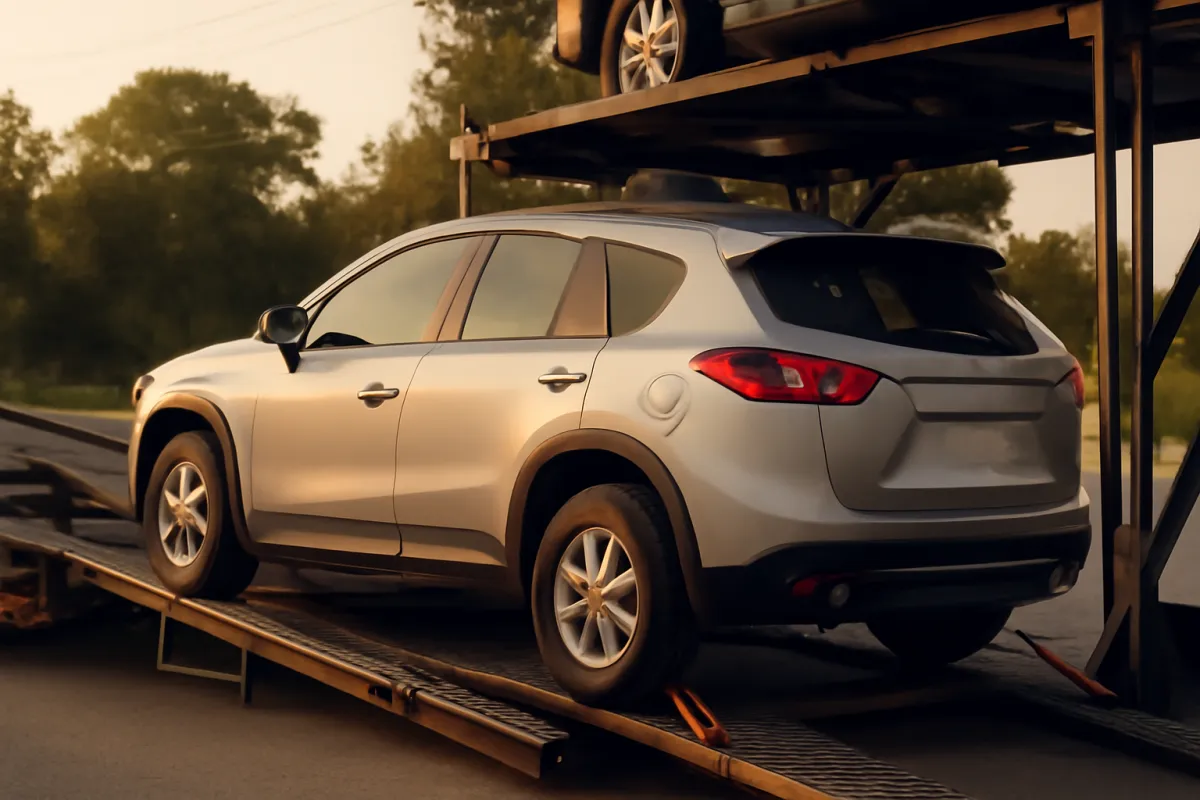
An out-of-state move forces a question a local move never does: how do the cars get there. Driving a vehicle across the country yourself looks free, but it carries fuel, tolls, lodging, several days of your time, and real mileage and wear on the car, and it only moves one vehicle per driver. Shipping a car on an auto-transport carrier commonly runs roughly $1.00 to $1.50 per mile on short interstate hauls, dropping toward $0.40 to $0.60 per mile on long cross-country routes, which puts a typical 1,500-mile shipment around $900 to $1,400 illustratively. Open carriers cost less than enclosed; door-to-door costs more than terminal pickup.
The math tilts toward shipping when the drive is long or the household has more cars than available drivers. Caravanning two vehicles across the country doubles the fuel, the lodging, and the coordination, and it puts thousands of hard miles on both cars; shipping one and driving the other often costs less all in and arrives with far less wear. For a single flexible driver making a shorter interstate hop, driving is usually the cheaper and simpler call. Either way, price the car as its own line in the move rather than an afterthought, because on a long relocation it is a genuine four-figure decision hiding inside the word “and the cars.”
Timing and delivery windows on a long haul
A long-distance move does not arrive when the truck leaves, and understanding the delivery window prevents the most common and stressful surprise of an interstate relocation. Because your shipment usually shares a trailer with other households to keep costs down, the carrier quotes a delivery spread rather than a fixed date, commonly a few days to two weeks depending on distance, with cross-country routes at the longer end. Your belongings may sit in transit while the truck fills and routes efficiently, and expedited or exclusive-use service, where your shipment travels alone on its own schedule, costs substantially more.
Plan the gap rather than fight it. Ask for the delivery window in writing, note the earliest and latest dates, and pack a bridge of essentials you keep with you: an air mattress or sleeping bags, a few days of clothes, chargers, medications, important documents, and a box of kitchen and bathroom basics. Building slack into your own timeline, arriving a few days before you expect delivery rather than counting on the furniture to beat you there, is far cheaper than paying for guaranteed dates or booking a hotel because the truck is three days out. Season matters here too: a peak-summer, month-end move competes with everyone else’s and both prices and windows stretch, so a mid-month, off-peak date buys a calmer, cheaper haul when any date flexes.
Deposit demands and rogue-mover scams
The interstate move is where moving scams concentrate, because the leverage is total when your entire household is on a truck headed across state lines and the law moves slower than a moving van. The classic pattern is the hostage load: a rogue operator, often reached through a broker or a too-good online quote, wins the job on a lowball number, loads everything you own, and then the price changes, sometimes to a multiple of the quote, with your belongings held in a warehouse at daily storage rates until you pay. Distance makes it worse, because the goods and the operator are now far away and hard to reach.
The red flags repeat with almost comic reliability, and every one is checkable before loading day. A quote dramatically below all others, delivered without any survey. A demand for a large cash deposit up front, where legitimate interstate carriers typically take little or nothing down and bill on delivery. No verifiable physical address, unmarked or wrong-name trucks, and paperwork that is blank, partial, or promised for later. The avoidance protocol is unglamorous: verify the USDOT and MC numbers and complaint history, insist on a written binding or not-to-exceed estimate from a real survey, never sign blank or incomplete documents, photograph your inventory before it loads, and pay by credit card rather than cash so a dispute is possible. On a long move, the scam is nearly always visible in advance, wearing all its red flags at once.
Storage-in-transit when the dates do not line up
Interstate moves rarely feature a clean handoff where you leave one home and walk into the next on the same day, and the gap has a name and a price. Storage-in-transit, or SIT, is short-term warehousing of your shipment when the destination is not ready to receive it, and on a long move the odds of needing it are real: a delayed closing, a lease that starts after the truck arrives, or a delivery window that lands before you do. Carriers bill SIT monthly, plus handling fees to move the goods into and back out of the warehouse, and those handling charges are often the larger surprise because they apply each direction.
Plan the possibility into the budget rather than discovering it on delivery day. If there is any chance the new home is not ready when the shipment arrives, ask each mover for their SIT rates and handling fees in writing during the quote, and understand how long free or included storage runs, if any. Sometimes the cheaper path is a slightly later pickup or a negotiated delivery date that avoids storage entirely; sometimes a short SIT stay is genuinely the best option. Either way, a date mismatch on a long move is common enough that a shipper who has priced the storage line in advance is never blindsided by it. Our true-cost-of-relocating roadmap folds gaps like this into the all-in picture of a move.
The hidden costs of settling in a new state
The truck fee is the headline of an out-of-state move, and it is also a minority of the money, because a new state charges its own entry fees the week you arrive. The deposit stack comes first: first month plus a security deposit on a new lease, commonly two months of rent due before a single paycheck arrives in the new city. Then the state-specific lines that a local move never triggers: new vehicle registration and title fees, a new driver license, updated insurance that reprices to the new address, and utility hookups and setup deposits. Add the unpaid days you take off to move and the cost of replacing whatever does not survive the haul or fit the new place.
Stacked together, these settling-in costs can rival or exceed the moving quote itself, which is why the all-in total of a relocation routinely runs a multiple of the truck fee. The mistake that hurts is treating the mover’s number as the budget and meeting the rest on a credit card during the tightest month of the year. Price the whole move: the transport this roadmap covers, the settling-in costs our true-cost-of-relocating roadmap inventories in detail, and the ongoing cost-of-living difference the calculator sizes as the salary you will need to keep your current life in the new state. A cheap move into a state you cannot afford is not a saving.
A worked example: two interstate moves at two distances
Time to run real households through everything above. The two scenarios use this roadmap’s illustrative model, the same math the companion beside this article runs live on your own numbers, so treat them as structure rather than quotes.
First, a two-bedroom household, roughly 5,000 pounds, moving 1,000 miles to a neighboring region. Full-service on the weight model, $0.55 per pound in handling plus $0.65 per pound per 1,000 miles, puts the linehaul core near $6,000; add roughly $800 of partial packing and $400 of materials and it lands near $7,200 all in. Choose a container instead and the same move commonly runs near $4,000 plus a few hundred dollars of labor-only help, a roughly $3,000 spread bought with a weekend of loading. Ship one car on top and add near $700 to $900. Second, a three-bedroom household, roughly 8,500 pounds, moving 2,500 miles across the country. The full-service linehaul alone reaches near $18,500; add packing, materials, and full-value protection and the all-in nears $21,000, while a container drops it toward $10,000 to $12,000 and a DIY truck lands lower still at the cost of a multi-day drive and every pound carried twice.
Two honest interstate prices for two households: near $7,200 for a shorter two-bedroom move and near $21,000 for a cross-country three-bedroom, before you choose a cheaper strategy on either. Layer in a shipped car, a possible SIT stay, and the settling-in costs of a new state, and the point sharpens: the truck is the anchor line, not the whole bill. The calculator tells you what your salary needs to be once you land; this math tells you what getting there costs.
The bottom line
An out-of-state move costs what the freight meter charges: your household’s weight multiplied by the miles it travels, plus packing, access, and the extras of a long haul. Illustratively that means roughly $2,000 to $5,000 for a studio or one-bedroom, $4,000 to $9,000 for a two-bedroom, and $7,000 to $15,000 or more for a three-bedroom household full-service, with containers 30 to 50 percent cheaper and DIY cheaper still in exchange for your own labor and days on the road. The levers that move a long-distance bill are the same every time: shed weight before the survey, get binding or not-to-exceed quotes from federally registered carriers you have verified, choose a strategy honestly against the bodies and days you have, plan the delivery window and any storage gap, and price the car as its own line. Price every home size and strategy with our moving-cost roadmap, count everything past the truck with our true-cost-of-relocating roadmap, and let this one make sure the ride between states costs what it should.
This roadmap is published by the ReloPeak desk for education, not as a quote and not as professional advice. Every rate, weight, mileage, and dollar figure in it is illustrative, written to show how an interstate move is priced rather than what your particular move will bill; real costs swing with the season, the route, the carrier, the fuel market, and the year. An out-of-state move carries federal contractual and liability stakes a local one does not, so before booking, verify each carrier’s USDOT and MC registration and complaint history yourself, gather current surveyed binding or not-to-exceed estimates on your own inventory and route, read the valuation and delivery terms in full, and consult a qualified moving, tax, or insurance professional about the registration, deductibility, and coverage questions a cross-country move can raise.
Frequently asked questions
How much does it cost to move out of state?
An out-of-state move is priced on the weight of your belongings times the distance they travel, not on hours, so the honest answer scales with both. Illustratively, a full-service interstate move commonly runs around $2,000 to $5,000 for a studio or one-bedroom, roughly $4,000 to $9,000 for a two-bedroom, and $7,000 to $15,000 or more for a three-bedroom household, with the higher end reflecting longer distances. Container and DIY options sit well below those figures because you supply the labor at one or both ends. Every number here is illustrative, so gather surveyed binding estimates on your own inventory and route before you budget.
What is the cheapest way to move out of state?
The cheapest way to move out of state is almost always a DIY one-way truck rental, because you supply every hour of labor and pay only for the vehicle and the road. Illustratively, a two-bedroom DIY move of 1,500 miles can land near $2,500 to $4,000 all in, against roughly $4,000 to $5,000 by container and near $7,600 full-service. A moving container is the middle path, cheaper than full-service and far less exhausting than driving a truck, because the carrier handles the cross-country haul while you load and unload. Full-service costs the most because you are buying labor at both ends and the drive. The cheapest option on paper is not free: DIY savings are paid in your own days behind the wheel, so match the strategy to how much labor and flexibility you actually have.
Is a rental truck with hired loading labor cheaper than a container?
Usually yes, and the combination is the hybrid strategy that many budget-minded movers land on. Illustratively, a two-bedroom DIY truck move of 1,500 miles runs near $2,500 to $4,000 all in, and adding a labor-only crew for a few hours of loading at the origin and unloading at the destination commonly adds several hundred dollars total, landing the hybrid somewhere around $3,000 to $4,600. That still sits at or below the roughly $4,000 to $5,000 a container commonly costs for the same move, and it keeps the heavy, injury-prone lifts off your own back while you supply only the driving. The container wins when you cannot or do not want to drive a truck cross-country, since the carrier handles the haul. Price both against real quotes, because the gap narrows on short routes and small households.
How is long-distance moving cost calculated?
Long-distance and interstate moves are calculated from a linehaul charge, which is your shipment weight multiplied by the mileage, plus fuel surcharges and accessorial fees for stairs, long carries, and shuttles. As an illustrative model, full-service pricing works out to roughly $0.55 per pound in base handling plus about $0.65 per pound for each 1,000 miles traveled. That is why decluttering before the survey pays off twice, once in handling and again across every mile. Ask each mover what weight or cube figure their quote assumes, because that single number drives the entire bill.
Is it cheaper to move out of state with a container or a full-service mover?
A container or portable-storage option is almost always cheaper than full-service for an out-of-state move, commonly landing 30 to 50 percent lower illustratively, because you load and unload it yourself and pay only for the transport. Full-service buys you a crew that packs, loads, drives, and unloads, which suits tight start dates and households without the time or bodies to do the lifting. A DIY truck rental is cheaper still on paper, though the gap narrows once fuel, one-way fees, and lodging are counted honestly. The right choice depends on how much labor you can supply and how firm your dates are.
How much does it cost to ship a car to another state?
Shipping a car on an auto-transport carrier commonly runs roughly $1.00 to $1.50 per mile for short interstate hauls and drops toward $0.40 to $0.60 per mile on long cross-country routes, which puts a typical 1,500-mile shipment somewhere around $900 to $1,400 illustratively. Open carriers cost less than enclosed ones, and door-to-door service costs more than terminal-to-terminal. Weigh that against the fuel, lodging, and days of driving a second vehicle across the country yourself. For a two-car household making a long move, shipping one car often costs less than the wear, fuel, and time of caravanning both.
How much does a DIY cross-country move really cost?
A DIY cross-country move looks cheap at the advertised truck rate and grows once every real line is counted: one-way rental fees, fuel at 8 to 10 miles per gallon over the whole route, tolls, several nights of lodging and meals, equipment, and the counter insurance. Illustratively, a two-bedroom DIY move of 1,500 miles can total near $2,500 to $4,000 all in, against a full-service figure several thousand dollars higher. The saving is real, but it is paid in your own days behind the wheel and your own back at both ends. DIY suits strong, flexible households more than tight start dates and dual incomes.
How do I check that an interstate mover is licensed?
Every legitimate interstate mover must be registered with federal regulators and carry a USDOT number and, for household goods, an MC (motor carrier) number, both of which you can verify before booking. Look the company up by that number to confirm the registration is active, the address is real, and the complaint history is not alarming. A carrier that cannot or will not give you its numbers, or whose registration is only weeks old and trailing a string of near-identical prior names, is a red flag worth walking away from. On an interstate move, the boring, verified, surveyed carrier is the entire point.
How long does an out-of-state move take to deliver?
Long-distance delivery is not next-day, because your shipment usually shares a truck with others and travels on a delivery window rather than a fixed date. Illustratively, carriers commonly quote a spread of several days to two weeks depending on distance, with cross-country routes at the longer end, and your goods may sit in transit while the truck fills and routes. Ask for the delivery window in writing, understand the earliest and latest dates, and plan a bridge of essentials, an air mattress, a few days of clothes, and a box of kitchen basics, for the gap. Building slack into your timeline is cheaper than paying for expedited or exclusive-use service.
What hidden costs come with moving to a new state?
The truck is only the first bill of an out-of-state move, and the ones that follow arrive during the tightest month. Expect a deposit stack of first month plus a security deposit on a new lease, new-state vehicle registration and driver-license fees, utility hookups and setup, lost income from unpaid moving days, and the cost of replacing whatever does not survive or fit. Illustratively, these settling-in costs can rival or exceed the moving quote itself, which is why the all-in total of a relocation often runs a multiple of the truck. Budget the whole move, not just the transport, before you commit.