
What's in this roadmap
- Why moving with pets goes wrong without a plan
- Before you start: what you need on hand
- Step 1: Gather vet records and a health certificate
- Step 2: Crate train your pet before moving day
- Step 3: Plan travel day, car versus air
- Step 4: Update the microchip and ID tags
- Step 5: Pet-proof the new home before arrival
- Step 6: Settle your pet into the new home
- Step 7: Handle long-distance and interstate rules
- A worked example: an illustrative interstate move with a dog and cat
- How the pet-move effort breaks down
- Common mistakes that stress your pet
- Troubleshooting: when a pet move meets reality
- Run your own pet-move plan
- Your pet-move checklist
- The bottom line
Short answer: Move with pets in seven steps starting four to six weeks out: build crate comfort early, gather vet records, update the microchip registry and ID tags with the new address before travel, get a health certificate close to the date if the move crosses a state line or flies, commonly dated within about ten days of travel, keep a pet travel kit with you, then open one quiet room first and let your pet decompress.
Moving is stressful for people, and it is often worse for the pets who cannot understand why the furniture is disappearing into boxes and the front door keeps standing open. A dog senses the disruption and paces; a cat hides and stops eating; both are at their highest risk of bolting on exactly the day when the house is full of strangers and open doors. The good news is that a pet move rewards preparation far more than it rewards improvisation, and almost everything that goes wrong on the day traces back to a step that could have been handled calmly weeks earlier.
This roadmap walks you through how to move with pets in seven steps, from gathering vet records and a health certificate to settling your pet into the new home. It sits alongside our long-distance roadmap, which fits the pet steps into the wider timeline of a big move, our out-of-state roadmap, which covers the interstate logistics a pet move rides on, and our change-of-address roadmap, which is where the microchip and ID update belongs in your broader address sweep. The calculator handles the salary side of a relocation while you read, and the companion below turns your pet, your travel mode, and your weeks-until-move into an illustrative prep timeline and a this-week priority. If the route runs across state lines, our roadmap on interstate moving costs prices the humans-and-furniture side of the same trip.
Key takeaways
- Start about four to six weeks out and work in sequence: crate comfort and vet records early, the health certificate and microchip update close to the date, and settling in after you arrive.
- For a move that crosses a state line or flies, many states and airlines require a health certificate from your vet, commonly dated within about ten days of travel, so confirm the current rule and time it late.
- Update the microchip registry and ID tags with your new address and phone before travel, because moving day is when a pet is most likely to slip away.
- Keep a pet travel kit with you, not on the truck, so you can care for your pet through the first night without opening a single box.
- At the new home, open one quiet room first and let your pet decompress over days rather than exploring the whole house at once, which is how a move goes from frightening to survivable.
Why moving with pets goes wrong without a plan
A pet move fails on timing and on empathy far more than on effort. Almost anyone can put a cat in a carrier; almost nobody can do it calmly for the first time at eight in the morning on moving day, with the movers waiting and the door propped open. Left to the last minute, the pet becomes the forgotten item on a long list, and the shortcuts start: no crate training, so the carrier is a battle; no health certificate, so an interstate move stalls at a checkpoint or an airline counter; no updated microchip, so a pet that slips out in the chaos has an old phone number on file. Every one of those gaps shows up on the worst possible day.
The second failure is treating the move as a single event rather than a transition the pet experiences over time. Packing changes the smells and sightlines of the only territory your pet knows, the travel day upends its routine, and the new home is a wall of unfamiliar sounds. When you spread the preparation across weeks and keep the pet’s routine as steady as possible, no single moment overwhelms the animal, and you arrive with a plan for the first night rather than an emergency. The seven steps below build in the two things a rushed pet move always drops: the paperwork that lets your pet travel legally, and the slow, patient handling that keeps a frightened animal safe. For how the wider move fits around these steps, our long-distance roadmap sets the overall timeline.
Before you start: what you need on hand
This roadmap works best if you settle a few basics first, so each step has real inputs rather than guesses. None of it takes deep research; it is information you already know or can gather in a short call to your vet.
- Your move date, or a target week. The date anchors the whole timeline and, crucially, tells you when a health certificate has to be dated, since its window is short. Even an approximate week is enough to start counting backward.
- Your pet’s basics. Species, age, temperament, and any medical conditions or medications, because a senior cat, an anxious dog, and a healthy young pet each need a different pace and different vet input.
- Your travel mode and distance. Whether you are driving or flying, and whether the move is local, long-distance within a state, or interstate, because those choices decide which paperwork you need and how the travel day is built.
- Your vet’s contact details. The single most useful phone number of the whole move, for records, the health certificate, advice on medications or calming aids, and a referral near your new home.
The full preparation takes an hour or two to plan and then spreads across several weeks in small sessions, a few minutes of crate training here, a vet call there, rather than one exhausting stretch. There is no special equipment beyond a well-fitted carrier or crate, ID tags, and a travel kit. Difficulty is low to moderate, and the main skill is starting early enough that crate comfort has time to build and the paperwork lands inside its window. With the date, the pet’s basics, and the travel plan in hand, the seven steps turn them into a schedule you can actually work. The companion below does the same, sizing an illustrative timeline to your own inputs.
Step 1: Gather vet records and a health certificate
Begin with the paperwork, because it has the least flexibility and the tightest deadlines of anything in a pet move. Book a vet visit a few weeks out and ask for a copy of your pet’s complete records: vaccination history, especially rabies, any prescriptions with enough medication to cover the move and the gap before you find a new vet, and a summary of any ongoing conditions. Ask your current vet for a referral or at least the type of specialist to look for near your new home, and confirm your pet is up to date on the core vaccinations that any destination or airline will expect.

The health certificate is the piece with a deadline. For a move that crosses a state line, many states require a Certificate of Veterinary Inspection, and airlines commonly require one for pets that fly. It is issued by a licensed veterinarian after an examination and typically must be dated within about ten days of travel, though the exact window varies by state and airline, so this figure is an illustrative common guide rather than a rule. Because it is time-limited, the certificate is one of the last steps, but you set it up now by booking the appointment for the right week. Watch out for assuming a local move needs no paperwork and an interstate one is the same as local; confirm the current requirements with your vet and the destination state’s animal health office, since the rules change and a few destinations have strict entry rules that need months of lead time. Step seven returns to those interstate and destination rules in detail.
Step 2: Crate train your pet before moving day
Introduce the carrier or crate early, because a pet that already sees it as a safe den travels far better than one meeting it for the first time under stress. The mistake almost everyone makes is storing the carrier out of sight and pulling it out only for vet trips, which teaches the pet that the crate means something unpleasant. Instead, bring it into the living space weeks ahead, leave the door open, and make it inviting with familiar bedding, a favorite toy, and treats placed inside, so the pet chooses to explore it on its own terms.
Build the association in short, rewarded sessions rather than one long ordeal. Feed meals near and then inside the crate, praise and treat any voluntary entry, and gradually close the door for a few seconds and then longer while you stay calm and nearby. For a dog, work up to short car rides in the crate so the motion becomes familiar; for a cat, a covered carrier in a quiet room often feels safer than an exposed one. The goal is a pet that walks in willingly, because forcing a frightened animal into a carrier on moving day is how people get scratched and pets get loose.
Watch out for rushing this step, since crate comfort is the one part of a pet move that genuinely cannot be crammed into a single day. If your move is short-notice, still start immediately, even a few days of positive sessions beats none, and lean harder on comfort items and a calm handler on the day itself. Illustratively, several weeks of brief daily sessions can turn a carrier from a battle into a place your pet retreats to voluntarily, which pays off at every later step, the vet visit, the travel day, and the first anxious nights in the new home.
Step 3: Plan travel day, car versus air
Decide how your pet will travel and build the day around the animal, because the travel itself is the highest-stress, highest-risk part of the whole move. The first choice is car versus air, and for many pets driving is the calmer option: you control the pace, keep your pet in its familiar crate the entire way, and can stop when needed. Flying is faster over long distances but adds airline crate specifications, advance booking, temperature and breed restrictions, and usually a health certificate dated close to the flight, with small pets sometimes riding in the cabin and larger ones as cargo.
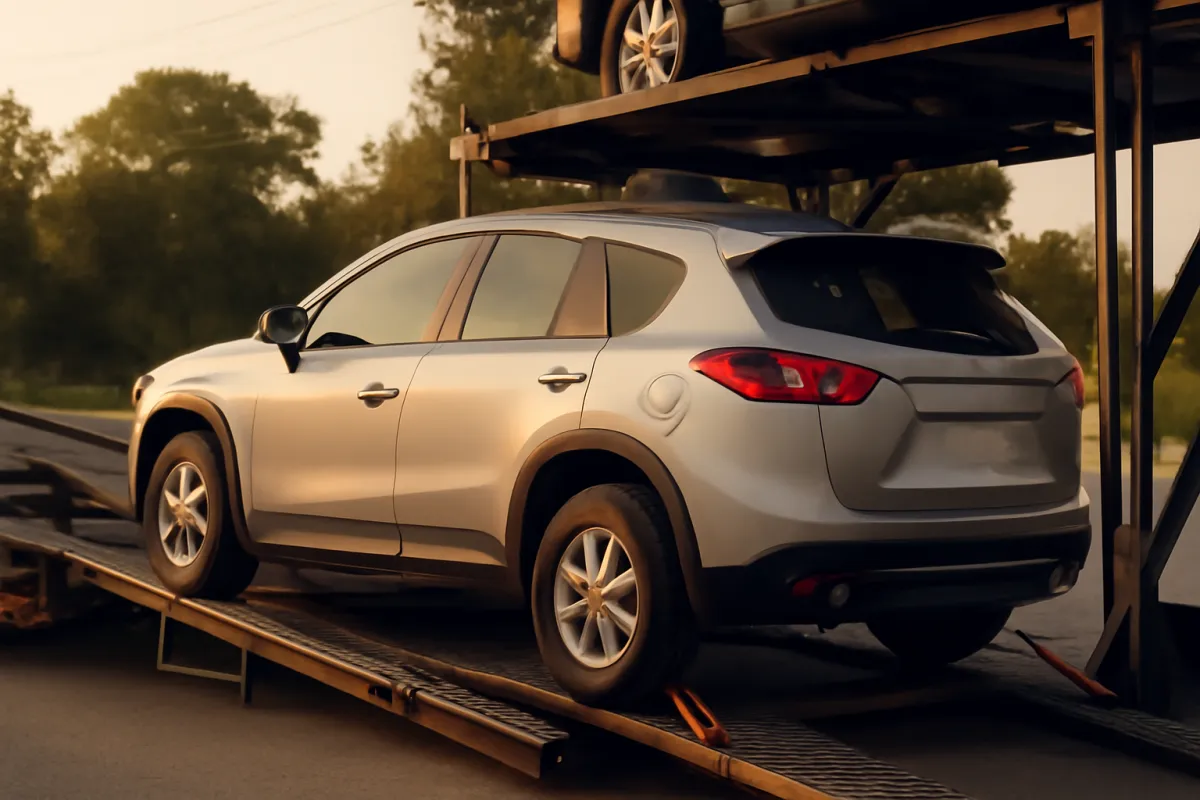
If you drive, secure the crate so it cannot slide, keep water handy, and stop every few hours for a leashed walk and a bathroom break, and never leave a pet in a parked car in heat even briefly. Feed a light meal several hours before departure rather than right before, to reduce car sickness, and keep the ID tags, records, and health certificate with you. If you fly, confirm the airline’s current pet policy well ahead, buy an approved carrier that meets its dimensions, and ask your vet about your specific animal, since many veterinarians caution against sedation for flights because it can affect breathing at altitude. Watch out for booking travel before you have confirmed the crate rules and the certificate timing, because a mismatch discovered at the counter can strand you. Whichever mode you choose, a pet travel kit rides with you, never on the moving truck.
Step 4: Update the microchip and ID tags
Update your pet’s identification before you travel, because moving day is statistically when a pet is most likely to get loose, and the day it goes missing is the day its ID needs to be current. A microchip is only useful if the registry has your correct contact details, so log in to the registry linked to your pet’s chip and change your address and phone number, or call the registry directly if you are not sure which one holds the record. If you do not know the chip number, your vet can scan it and identify the registry. This small task is quietly one of the most important in the whole move.
At the same time, order a new physical ID tag with your current phone number and, if you like, your new address, and put it on the collar before the move rather than after you arrive. During the move itself, a temporary tag noting that the pet is in transit with your cell number can help a stranger reach you quickly if your pet slips out at a rest stop or in the confusion of loading. Keep a recent photo of your pet on your phone, which is the single most useful thing for making lost-pet posters or alerting shelters if the worst happens.
Treat this as part of the same address-change sweep you do for your own accounts, which our change-of-address roadmap lays out in full, so the pet’s records update alongside your license, bank, and utilities rather than getting forgotten. Watch out for the common assumption that a microchip updates itself or that the vet does it automatically; it does not, and a chip with a disconnected old number is no better than no chip at all when a frightened pet is loose in a neighborhood it has never seen.
Step 5: Pet-proof the new home before arrival
Prepare the new home before your pet sets foot in it, because a disoriented animal in an unsecured space is a pet that escapes, chews something dangerous, or gets stuck somewhere you cannot reach. Ideally, do a walk-through before moving day or send someone ahead, and check the perimeter first: look for gaps in fencing, loose gates, torn screens, and any hole a small animal could squeeze through, and confirm that doors and windows close and latch. A single unsecured gate is how a dog is gone within an hour of arriving somewhere it does not know its way home from.

Inside, remove or secure the hazards a curious pet finds fast: cleaning products and chemicals left by previous occupants, pest-control bait, loose electrical cords, small objects on the floor, and any plants that are toxic to animals. Choose one quiet room, a bedroom or a bathroom away from the moving traffic, to be your pet’s base, and set it up before the pet arrives with familiar bedding, bowls, water, a litter box for a cat, and a favorite toy, so the first space your pet experiences smells and feels like the old home rather than a bare, echoing box. Keep this room closed off from the movers and the propped-open front door.
Watch out for letting your pet loose in the full house on arrival to explore, which overwhelms most animals and multiplies escape routes at the exact moment doors are opening and closing. The base room is the anchor: a small, safe, familiar territory the pet can retreat to while the rest of the house is chaos, and the starting point for the gradual introduction that step six covers. A little preparation here prevents the most frightening outcome of any pet move, a lost animal in an unfamiliar place.
Step 6: Settle your pet into the new home
Introduce the new home gradually, because how you handle the first days shapes how quickly your pet adjusts and whether the move leaves a lasting anxiety. Start with the single quiet base room you set up in step five, and let your pet stay there with its familiar things until it seems calm, eating, and curious rather than hiding. Then open the house a room or two at a time, supervised, letting the pet set the pace. A cat especially benefits from this slow expansion, since being loosed into a whole strange house at once is genuinely frightening for a territorial animal.

The single most powerful tool for settling a pet is routine. Feed at the same times, walk at the same times, use the same bowls, bedding, and toys, and keep your own energy calm, because pets read their owners closely and a relaxed handler signals that the new place is safe. Expect the first days to include hiding, reduced appetite, clinginess, or accidents even in a house-trained pet; these are common responses to disorientation, not signs of a lasting problem, and they usually ease over days to a few weeks. Keep a cat indoors for several weeks before any supervised outdoor access, and keep a close watch on doors and gates while a dog learns the new territory and where home now is.
Watch out for expecting a fast bounce-back and reacting with frustration to accidents or clinginess, which only adds stress to an already disoriented animal. Give attention, patience, and consistency, and update your records with a new local vet early so you have somewhere to turn if your pet stops eating for more than a day or two or shows signs of illness. Settling is the step that cannot be rushed, but done gently it is where the whole move finally lands.
Step 7: Handle long-distance and interstate rules
Confirm the interstate and destination rules deliberately, because a long-distance or cross-border move layers legal requirements on top of everything else, and discovering them late is how a move gets stranded. The core document for crossing a state line is often a Certificate of Veterinary Inspection, the health certificate from step one, which many states require and which airlines commonly demand for pets that fly. It usually confirms core vaccinations and must be dated within a short window, commonly cited as about ten days before travel, but the exact requirement varies by state and by airline, so treat that figure as illustrative and verify the current rule.
Some destinations go much further. A few states and territories, Hawaii being the most cited, maintain strict rabies and quarantine entry rules that can require months of testing, paperwork, and advance scheduling, and moving to one without preparing early can mean your pet is held in quarantine on arrival. International moves add import permits, specific vaccination timelines, and sometimes microchip standards that must be met in a set order. Because these rules change and differ sharply by destination, the honest step is to confirm the current requirements directly with your veterinarian, the destination state’s animal health office, or the relevant authority, well before you travel rather than relying on any general summary.
The logistics of the move itself scale up too. On a multi-day drive, plan pet-friendly lodging in advance, since not every hotel accepts animals, and map rest stops around your pet’s needs. If your household goods travel separately on a long-distance carrier, as our out-of-state roadmap describes, your pet and its travel kit go with you, not with the shipment. Watch out for treating an interstate pet move like a local one; the paperwork, the timing, and the destination rules are the difference, and they reward starting early. Run your own dates and distance through the calculator and the companion to see where these steps fall on your timeline.
A worked example: an illustrative interstate move with a dog and cat
Run one realistic pet move through all seven steps. The movers: a family relocating interstate about six weeks out, driving two days to the new home with a friendly dog and a shy indoor cat, sending their household goods on a separate long-distance carrier.
Step one, six weeks out, they book a vet visit, collect both pets’ records and enough medication to bridge the move, and schedule the health certificate appointment for the week before departure so it lands inside its window. Step two, they bring both carriers into the living room and begin short daily sessions, feeding the cat near its open carrier and taking the dog on brief crated car rides, so by moving day both animals enter their carriers willingly. Step three, they choose to drive rather than fly, mapping rest stops every few hours and booking two pet-friendly hotels along the route. Step four, two weeks out, they log in to update both microchip registries with the new address and phone and order fresh ID tags, putting them on before the drive.
Step five, a few days before arrival, a relative walks the new home, checks the fenced yard for gaps, latches the windows, clears out cleaning products left in a cabinet, and sets up a spare bedroom as the pets’ base room with familiar bedding, bowls, and the cat’s own litter box. Step six, on arrival, they keep both pets in that quiet room while the movers work, then open the house gradually over the next several days, feeding and walking on the old schedule; the dog settles in a few days, the cat takes closer to two weeks. Step seven, they confirmed the destination state’s certificate rule ahead of time, carried both pets and the travel kit in their own vehicle, and registered with a local vet in the first week.
On the illustrative model this roadmap uses, their preparation spread across roughly six weeks, with crate training as the longest lead item and the health certificate as the latest, is what let a two-day drive with two anxious animals go calmly rather than in crisis. That is the shape of the chart below: the tasks that need the most lead time sit at the front, and the time-limited paperwork lands last.
Illustrative pet-move prep timeline
Roughly how many weeks before the move to start each task, on this roadmap's illustrative model. Illustrative, not a rule; the health certificate window in particular varies by state and airline.
The tasks that need the most lead time, crate comfort and interstate research, sit at the front. The time-limited health certificate lands last because its window is short, commonly about ten days before travel.
How the pet-move effort breaks down
Seeing the work as shares makes the point that the travel day is only a slice of the job, and the calm depends on the weeks of preparation and the days of settling that bracket it. Front-load the preparation and the travel day carries far less weight, because your pet arrives crate-comfortable, documented, and identifiable rather than facing every stressor for the first time at once.
Where the moving-with-pets effort goes
How the work of a pet move distributes across the phases, as a share of the whole. Illustrative model; your split shifts with distance, travel mode, and your pet's temperament.
The travel day is a quarter of the work, not the whole of it. The preparation and the settling on either side are what make the day itself go calmly.
Common mistakes that stress your pet
The expensive errors cluster around the same roots: leaving the pet as an afterthought and rushing the parts that need time. Collected in one place, the mistakes that most often derail a pet move.
- Skipping crate training. Introducing the carrier for the first time on moving day turns a routine step into a battle and teaches the pet that the crate means panic. Bring it out weeks early and make it a safe, familiar den.
- Missing the health certificate window. Assuming an interstate or air move needs no paperwork, or booking it too early so it expires, can strand you at a border or an airline counter. Confirm the current rule and time the certificate to travel.
- Forgetting to update the microchip. A chip with an old phone number is no help when a frightened pet slips out on the one day it is most likely to. Update the registry and the ID tags before you travel, not after.
- Letting the pet loose in the new house on arrival. Opening the whole home at once overwhelms most animals and multiplies escape routes while doors are opening and closing. Set up one quiet base room and expand gradually.
- Not pet-proofing the new home first. Unsecured gates, torn screens, chemicals left by previous occupants, and toxic plants are hazards a disoriented pet finds fast. Walk the perimeter and clear the hazards before the pet arrives.
- Expecting an instant adjustment. Reacting with frustration to hiding, accidents, or a lost appetite adds stress to an already disoriented animal. Keep routines identical, give it days to weeks, and watch for signs that need a vet.
Every one traces back to treating the pet as one more box rather than a family member experiencing an upheaval it cannot understand, which is exactly what an early, sequenced plan prevents.
Troubleshooting: when a pet move meets reality
Even a careful plan meets surprises. Here is how to handle the common ones without abandoning the roadmap.
What if my move is last-minute? Compress the same sequence rather than skipping it, and lean hardest on comfort and calm. Even a few days of positive crate sessions beats none, so start immediately with treats and familiar bedding inside the carrier. Call your vet right away about records and, for an interstate or air move, whether a health certificate can still be issued in time, since that window is the one hard constraint. Update the microchip and ID today, pack the travel kit, and set up a single base room at the new home. A rushed pet move will not be perfect, but a current ID, the right paperwork, and a calm handler prevent the worst outcomes.
What if my pet has anxiety or a medical condition? Talk to your vet early and specifically about your animal, since a senior pet, an anxious one, or a pet on medication may need a different pace, extra records, or professional advice on calming aids. Some owners use vet-recommended calming products for the travel day, and your vet is the right source for whether anything is appropriate, because many caution against sedation for flights in particular. Carry enough medication to cover the move and the gap before you register with a new vet, and keep the old vet’s number for questions in the first weeks.
What if I am flying and my pet is too large for the cabin? Larger pets often travel as cargo, which has its own booking, crate, temperature, and health-certificate rules that vary by airline and change seasonally. Confirm the current policy directly with the airline well ahead, buy an approved crate that meets its exact specifications, and label it with your contact details and the pet’s information. If the cargo route feels wrong for your animal, some families choose a longer drive or a professional pet-transport service instead; weigh the options against your pet’s temperament rather than only the calendar.
What if my pet gets loose during the move? Act fast and use the preparation you did: the updated microchip and current ID tag are exactly what a finder or shelter needs, and the recent photo on your phone becomes a lost-pet poster and a shelter alert immediately. Search the immediate area first, since a frightened pet often hides close by, notify local shelters and vets, and post to neighborhood and lost-pet channels. This is the scenario every earlier step, the ID, the microchip, the secured perimeter, was designed to prevent or shorten, which is why they matter most on the day nothing goes to plan.
Run your own pet-move plan
Everything above assembles into a method you can run for your own animals over a few weeks rather than one frantic day. Gather the records and time the health certificate; crate train early; plan the travel day around your pet; update the microchip and ID before you go; pet-proof the new home and set up a base room; settle your pet in gradually; and confirm the interstate or destination rules well ahead. The same sequence works whether you are moving a single cat across town or a dog and a cat across the country, only the paperwork and the travel day scale with the distance.
The companion beside this roadmap sizes the plan for you. Choose your pet, your travel mode, and the weeks until your move, and it returns an illustrative prep timeline, how many weeks to aim at for crate comfort, a note on the health-certificate window, and a plain-language priority for this week. Change the weeks and watch the pace shift; change the distance or the mode and watch the paperwork advice change. Pair it with the calculator for the salary side of a relocation and our long-distance roadmap for the wider timeline, and the vague dread of “how will the pets ever handle this” becomes a dated schedule you can act on. Every figure it shows is illustrative, and the health and travel steps should always be confirmed with your own veterinarian.
Your pet-move checklist
Use this as the save-this version, the compact list you can run for any move with a pet.
- 4 to 6 weeks out: book the vet visit, collect records and medication, and start crate training with short, rewarded sessions.
- Early on: confirm the interstate, airline, or destination rules, since a few destinations need months of lead time.
- 2 weeks out: update the microchip registry with your new address and phone, and order new ID tags to put on before travel.
- The week before: get the health certificate dated inside its window for an interstate or air move, and book pet-friendly lodging for a multi-day drive.
- Pack a travel kit: food, medication, bowls, water, leash, waste supplies, records, a comfort item, and a recent photo, kept with you.
- Before arrival: pet-proof the new home, check fences and gates, clear hazards, and set up one quiet base room with familiar things.
- On the day: keep your pet secured away from the movers and open doors, and never leave a pet in a hot parked car.
- After arrival: open the house gradually, keep routines identical, register with a local vet, and give days to weeks for settling.
Print it, screenshot it, or rebuild it in the companion; the format matters less than starting early enough that crate comfort and the paperwork both have room to land.
The bottom line
Moving with pets comes down to preparing for the animal, not just the day: gather the records and time the health certificate, crate train early, plan the travel day around your pet, update the microchip and ID before you leave, pet-proof the new home and set up a base room, settle your pet in gradually, and confirm the interstate or destination rules well ahead. Taken as a sequence over several weeks, a pet move stops being a frightening upheaval and becomes a series of calm, finished tasks, and your pet arrives safe, documented, and able to decompress rather than lost or panicked. Every figure here, the six-week runway and the roughly ten-day certificate window, is illustrative and varies by pet and destination. Fit the pet steps into the wider move with our long-distance roadmap and out-of-state roadmap, fold the microchip update into our change-of-address roadmap, and let this one turn the scariest part of a relocation into a plan you can work.
This roadmap is published by the ReloPeak desk for education, not as veterinary advice, a moving contract, or a legal statement of any state’s entry rules. Every figure in it, the roughly six-week runway, the illustrative ten-day certificate window, and the phase shares, is chosen to show how the pieces of a pet move fit together rather than to predict your own situation; the real requirements move with your pet, your destination, your travel mode, and rules that change over time. Health, medication, sedation, and travel decisions belong with a licensed veterinarian who knows your animal, and interstate, airline, and destination entry rules should be confirmed with your vet and the relevant animal health authority before you rely on them, so treat everything here as a starting point to adapt rather than a rule that fits every pet.
Frequently asked questions
How do I move with pets?
Move with pets by preparing well before the day rather than improvising on it. Gather your pet records and, for a move that crosses a state line or flies, an interstate health certificate from your vet. Crate train early so the carrier feels safe, plan the travel day around your pet whether you drive or fly, and update the microchip registry and ID tags with your new address and phone. Pet-proof the new home before your pet arrives, set up one quiet room with familiar bedding and bowls, and let your pet decompress slowly rather than opening the whole house at once. Taken as a sequence over several weeks, a pet move turns from a frightening upheaval into a series of calm, finished tasks. Every figure here is illustrative, and health and travel steps should always be confirmed with your own veterinarian.
How far in advance should I prepare to move with a pet?
For most moves, starting about four to six weeks out gives your pet time to adjust and gives you time to handle the paperwork. Crate training benefits most from an early start, since a carrier that feels safe after weeks of short, rewarded sessions is very different from one introduced the night before. The vet visit, records, and any microchip update can happen a few weeks out, while an interstate or airline health certificate usually has to be dated close to travel, commonly within about ten days, so it is one of the last steps. If your move is short-notice, compress the same sequence and lean on comfort items and a calm routine rather than skipping the vet entirely. Even a rushed pet move goes better with a plan than without one.
Do I need a health certificate to move a pet to another state?
For a move that crosses a state line, many states require a Certificate of Veterinary Inspection, often called a health certificate, and airlines commonly require one for pets that fly. The certificate is issued by a licensed veterinarian after an examination, usually confirms core vaccinations such as rabies, and typically must be dated within about ten days of travel, though the exact window and requirements vary by state and airline. A few destinations, Hawaii being the most cited, have strict rabies and quarantine entry rules that require months of advance preparation. Because the rules change and differ by destination, confirm the current requirements with your veterinarian and the destination state's animal health office before you travel rather than relying on a general figure. This roadmap frames the ten-day window as a common illustrative guide, not a guarantee.
How do I move a cat without stressing it?
Cats are territorial and often find moves more stressful than dogs, so the goal is to preserve familiarity and control the environment. Introduce the carrier early as an everyday open object with treats and bedding inside, so it stops being a signal of the vet. On moving day, keep your cat in a quiet, closed room or a secured carrier away from the chaos of open doors and movers, with water and a small litter option nearby. At the new home, set up a single quiet room first with the familiar litter box, bowls, bedding, and a hiding spot, and let your cat explore the rest of the house gradually over days rather than all at once. Keep an indoor cat inside for a few weeks before allowing any supervised outdoor access, since a disoriented cat can bolt and get lost in unfamiliar territory.
Should I drive or fly with my pet when moving?
Driving gives you the most control and is often the calmer choice for a pet, since you set the pace, take breaks, and keep your pet in a familiar crate the whole way. On a road move, secure the crate, stop every few hours for water and a leashed walk, never leave a pet in a parked car in heat, and keep ID and records with you. Flying is faster over long distances but adds airline crate rules, a booking, temperature restrictions, and usually a health certificate dated close to the flight, and small pets sometimes ride in the cabin while larger ones travel as cargo. Many veterinarians caution against sedating pets for flights because it can affect breathing at altitude, so ask your vet rather than assuming. Choose based on distance, your pet's temperament, and the airline's current policy, and confirm the details before you commit.
How do I update my pet's microchip and ID when I move?
A microchip only helps reunite you with a lost pet if the registry has your current contact information, so updating it is one of the most important and most forgotten moving tasks. Log in to the registry associated with your pet's chip and change your address and phone number, or contact the registry directly if you are unsure which one holds the record. At the same time, order a new ID tag with your current phone number, and put it on before travel rather than after you arrive, since the highest risk of a pet slipping away is during the move itself. If you do not know your pet's chip number, your vet can scan the chip and look up the registry. Treat the microchip update as part of the same address-change sweep you do for your own accounts.
How long does it take a pet to adjust after moving?
Adjustment varies widely by animal and temperament, but many pets settle over a span of days to a few weeks, with some cats and anxious dogs taking longer. Expect the first days to include hiding, reduced appetite, clinginess, or accidents even in a house-trained pet, all of which are common responses to a disorienting change rather than signs of a lasting problem. You speed the adjustment by keeping routines identical to before, feeding and walking at the same times, using the same bowls, bedding, and toys, and introducing the new space gradually from one calm room outward. Give plenty of attention and patience, and keep a close eye on doors and gates while your pet learns the new territory. If your pet stops eating for more than a day or two, shows signs of illness, or seems severely distressed, contact a veterinarian.
What should go in a pet travel kit for moving day?
A pet travel kit holds everything your pet needs during the move and the first day, and you keep it with you rather than on the truck. A common list includes several days of food and any medications, a bowl for food and water, bottled water, a leash and harness, waste bags or a small litter setup, a familiar blanket or toy for comfort, cleaning supplies for accidents, and copies of vaccination records and the health certificate. Include a recent photo of your pet in case it gets lost, and keep the ID tag and microchip details handy. The point is to arrive able to care for your pet through the first night without opening a single moving box, which matters most on a long-distance move when your belongings may arrive a day or several after you do.